

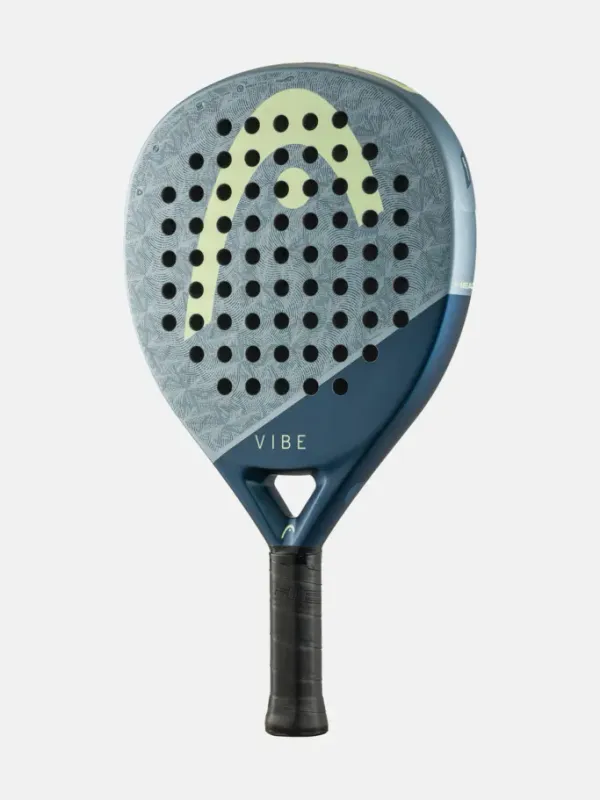
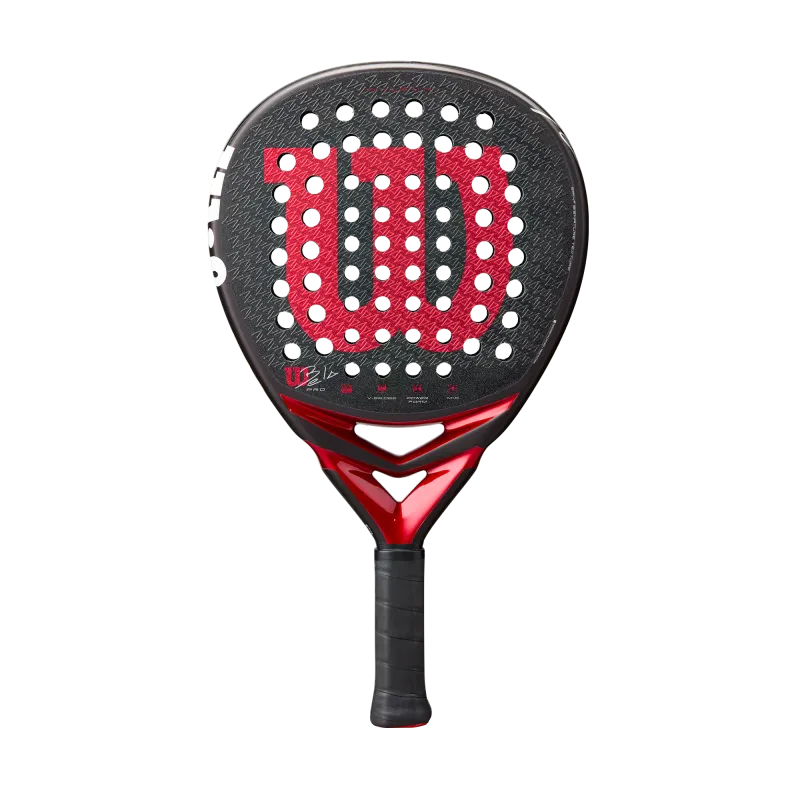
The Head Vibe 2026 is a lightweight teardrop racket tailored for allrounders who value swift handling and arm comfort. Conversely, the Wilson Bela Pro V3 is a heavier, advanced teardrop option designed for court builders who demand structural mass and an even balance. While both models achieve a balanced 3 out of 5 power-to-control rating in our assessment, they suit distinctly different player profiles and experience levels.
| Feature / Spec | Head Vibe 2026 | Wilson Bela Pro V3 |
|---|---|---|
| Season | 2026 | Not stated |
| Player Level (Manufacturer) | Not stated | Advanced |
| Shape (Manufacturer) | Not stated | Teardrop |
| Shape (our assessment) | Teardrop | Not assessed separately |
| Weight | 350 g | 370 g |
| Balance | Not stated | Even |
| Frame Material | Not stated | Carbon 24K |
| Face Material | Fiberglass | Not stated |
| Core (Manufacturer) | Power Foam | Medium |
| Core Hardness (our assessment) | Soft | Medium |
| Sweet Spot (our assessment) | Medium | Medium |
| Power vs Control (our assessment) | 3 / 5 | 3 / 5 |
| Target Player Profile (our assessment) | Allrounder | Builder |
Which one has more power?
In our assessment, both rackets sit at a balanced 3 out of 5 on the power-versus-control scale, meaning neither is built strictly as a pure power weapon nor as a pure control tool. However, the way each racket generates pace during offensive play differs significantly due to construction and mass.
The Head Vibe 2026 relies on a lighter 350 g build combined with Power Foam and a fiberglass face. In our assessment, its soft core hardness gives it a springy feel that easily propels the ball on fast swings. This allows allrounders to generate quick depth on bandejas or volleys without needing maximum physical effort.
By contrast, the Wilson Bela Pro V3 carries a heavier weight of 370 g and features an even balance alongside a Carbon 24K frame. Paired with a medium core hardness in our assessment, the racket offers substantial physical mass behind the ball. Advanced players who can swing a heavier frame cleanly will find that the additional mass helps drive deep viboras and smashes, relying on frame stability rather than soft core rebounding.
Which is easier to play?
Ease of play largely comes down to total weight, core density, and target user level. At 350 g, the Head Vibe 2026 is noticeably lighter, making it very maneuverable when defending off the glass or reacting quickly in fast net exchanges. Its fiberglass face and soft core hardness (in our assessment) cushion incoming pace, providing comfort and forgiving feedback on off-center hits. Although the manufacturer has not stated an official target skill level for the Head Vibe 2026, its lightweight nature makes it accessible to a wide range of players.
The Wilson Bela Pro V3 is explicitly built for advanced players, according to the manufacturer. Weighing 370 g, it places greater demand on the player's forearm and wrist endurance. While its even balance keeps the weight distributed evenly, defending low balls near the back glass requires solid physical conditioning and solid technical execution. In our assessment, both rackets share a medium sweet spot size, but the lower weight of the Head Vibe 2026 makes it the less demanding option overall.
Who should buy which?
Head Vibe 2026 is best for:
- Allrounders looking for a versatile teardrop shape (in our assessment) that balances attack and defense.
- Players who prefer a lighter 350 g weight for improved maneuverability and reduced arm strain.
- Anyone who enjoys the soft feel of Power Foam paired with a comfortable fiberglass surface.
Wilson Bela Pro V3 is best for:
- Advanced players (as classified by the manufacturer) who have the technical skills to manage a 370 g racket.
- Game builders who want an even-balanced teardrop racket with a strong Carbon 24K frame construction.
- Players who prefer a medium core hardness (in our assessment) for precise, stable shot-making during aggressive court play.
Frequently asked questions
What power vs control rating do these rackets have?
In our assessment, both the Head Vibe 2026 and the Wilson Bela Pro V3 receive a 3 out of 5 on the power-to-control scale, indicating a balanced performance profile suited for versatile play.
What are the core differences between the two models?
The manufacturer lists Power Foam for the Head Vibe 2026, which we rate as soft core hardness. The Wilson Bela Pro V3 features a medium core specified by the manufacturer, which we rate as medium core hardness.
What are the main frame and weight specs?
The Head Vibe 2026 weighs 350 g with a fiberglass face (frame material is not stated). The Wilson Bela Pro V3 weighs 370 g with an even balance and a Carbon 24K frame (face material is not stated).