

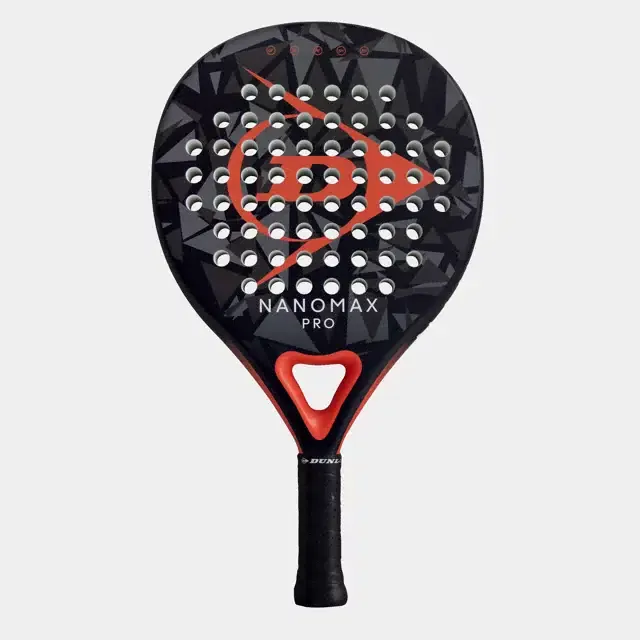
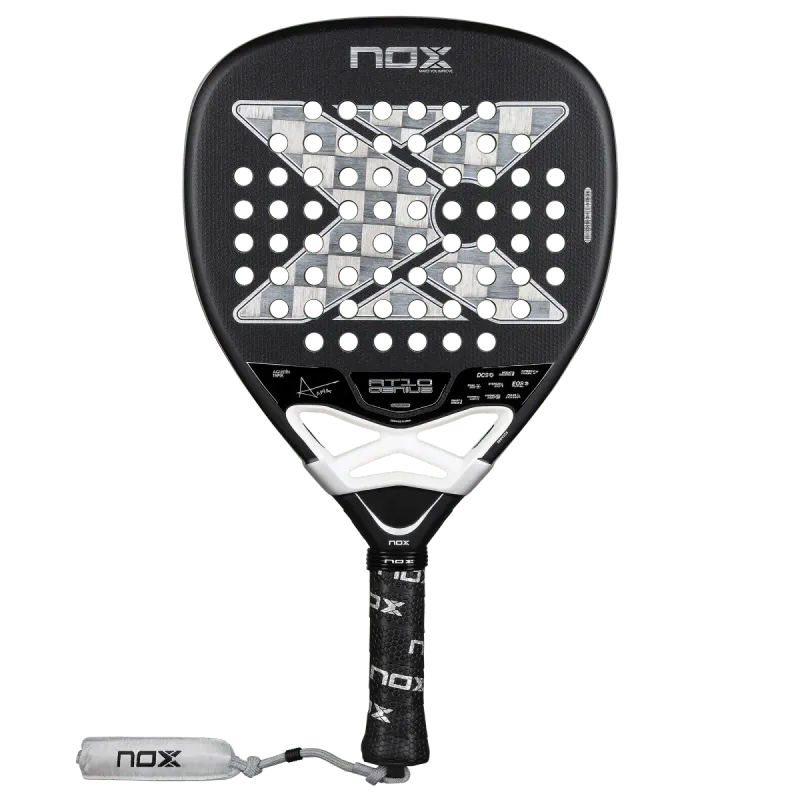
The Dunlop Nanomax Pro is best suited for intermediate allrounders seeking a versatile racket that balances power and control. Conversely, the NOX AT10 Genius Attack 18K is tailored for pro-level players who demand maximum power for an aggressive attacking game. Your choice depends on whether you prefer a balanced setup for general play or an unyielding offensive tool at the net.
| Feature | Dunlop Nanomax Pro | NOX AT10 Genius Attack 18K |
|---|---|---|
| Target Player Level (Manufacturer) | Intermediate | Pro |
| Weight (Manufacturer) | 365 g | 360–375 g |
| Shape (Manufacturer) | Not stated | Diamond |
| Frame Material (Manufacturer) | Not stated | Carbon 18K |
| Core Material (Manufacturer) | Pro EVA | Medium |
| Balance (Manufacturer) | Not stated | Adjustable |
| Shape (our assessment) | Hybrid | Not stated |
| Core Hardness (our assessment) | Medium | Medium |
| Power vs Control (our assessment) | 3 (Balanced) | 5 (Pure power) |
| Sweet Spot Size (our assessment) | Medium | Small |
| Ideal Player Type (our assessment) | Allrounder | Attacker |
Which one has more power?
When evaluating offensive output for high-impact shots like the smash or aggressive net volleys, the NOX AT10 Genius Attack 18K stands out. In our assessment, we rate its power vs control at 5 out of 5, placing it squarely in the pure power category. This matches the manufacturer's diamond shape, Carbon 18K frame, and pro-level target design, all built to maximize speed on the ball when attacking.
In contrast, we rate the Dunlop Nanomax Pro at 3 out of 5 on our power vs control scale, representing a balanced profile. While it features a Pro EVA core stated by the manufacturer and a medium core hardness in our assessment, it is designed for controlled shots like the bandeja or vibora rather than pure brute force. Players relying heavily on overhead put-aways will find more power in the NOX, while those who want predictable depth on transition shots will favor the Dunlop.
Which is easier to play and defend with?
Defending off the glass and managing difficult defensive lobs requires a forgiving sweet spot and manageable handling. In our assessment, the Dunlop Nanomax Pro offers a medium sweet spot combined with a hybrid shape. Coupled with a fixed manufacturer weight of 365 g, it provides stable and approachable handling for intermediate players working to keep unforced errors low during long rallies.
The NOX AT10 Genius Attack 18K presents a steeper learning curve in defensive scenarios. In our assessment, its sweet spot is small, which requires precise contact when under pressure near the back glass. While the manufacturer highlights an adjustable balance system and a weight range of 360–375 g to help customize the racket's feel, its diamond shape and high power focus mean off-center defensive hits are less forgiving for non-pro players.
Who should buy which?
Choose the Dunlop Nanomax Pro if you:
- Are an intermediate player looking for a balanced tool to build consistency across the entire court.
- Want an allrounder profile with a medium sweet spot (in our assessment) that forgives off-center hits during glass defense.
- Prefer a fixed weight racket (365 g) with a Pro EVA core.
Choose the NOX AT10 Genius Attack 18K if you:
- Are a pro-level player who plays an aggressive game from the left side of the court.
- Want maximum offensive capacity, rated 5 out of 5 for power in our assessment.
- Value specialized structural features like a Carbon 18K frame, diamond shape, and adjustable balance.
Frequently asked questions
What is the difference in sweet spot size between these rackets?
In our assessment, the Dunlop Nanomax Pro features a medium sweet spot, making it more forgiving. The NOX AT10 Genius Attack 18K features a small sweet spot in our assessment, demanding higher precision from the player.
What are the official weights specified by the manufacturers?
The Dunlop Nanomax Pro has a fixed weight of 365 g stated by the manufacturer. The NOX AT10 Genius Attack 18K has a manufacturer-stated weight range of 360–375 g alongside an adjustable balance system.
Which frame materials do these models use?
According to the manufacturer, the NOX AT10 Genius Attack 18K uses a Carbon 18K frame. The manufacturer does not state the frame material for the Dunlop Nanomax Pro.