

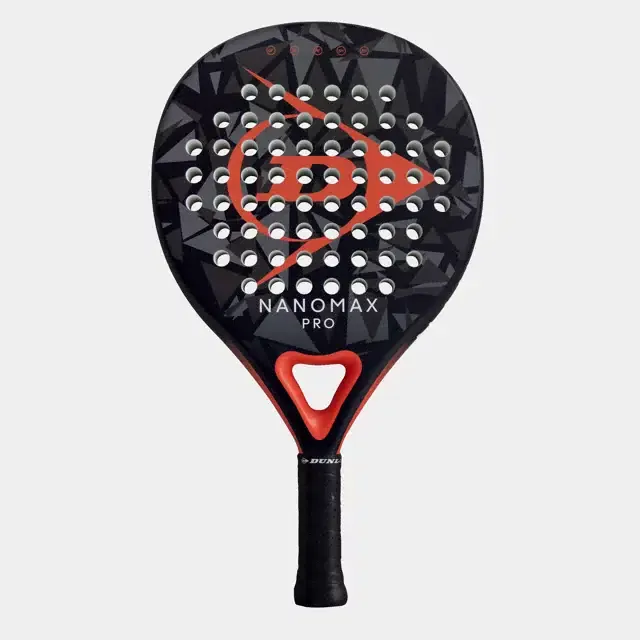
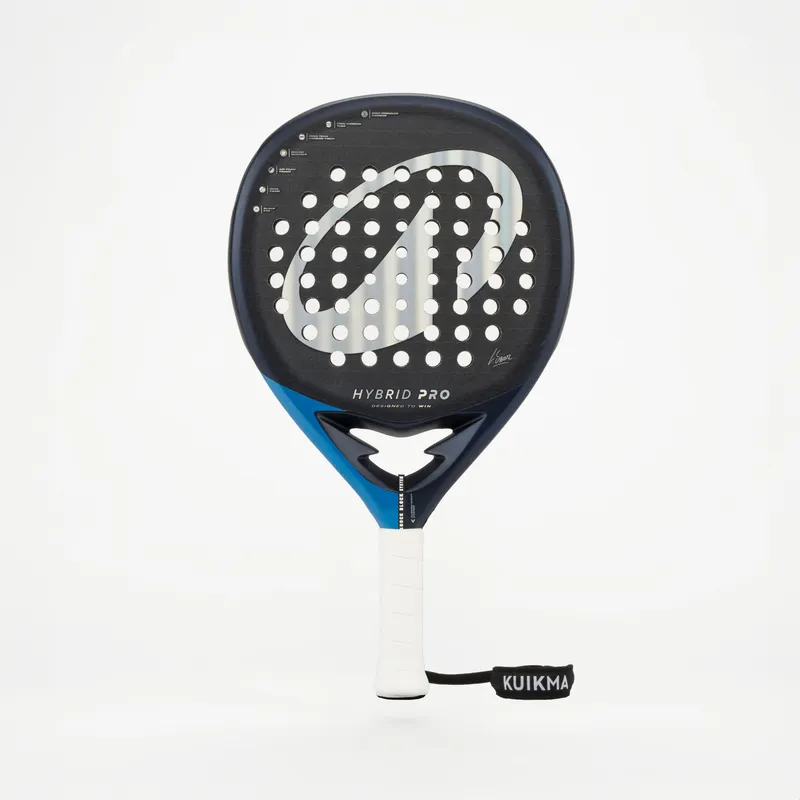
The Dunlop Nanomax Pro is tailored for intermediate all-round players looking for a balanced racket with a Pro EVA core. The Kuikma Hybrid Pro is aimed at advanced all-rounders and attackers seeking a versatile 38 mm hybrid frame. While both rackets share a 365 g weight and a balanced 3/5 power-to-control profile, their target player levels and structural details set them apart.
| Feature | Dunlop Nanomax Pro | Kuikma Hybrid Pro |
|---|---|---|
| Weight | 365 g (manufacturer) | 365 g (manufacturer) |
| Core Material | Pro EVA (manufacturer) | Not stated |
| Frame Shape | Not stated | Hybrid (manufacturer) |
| Profile Thickness | Not stated | 38 mm (manufacturer) |
| Player Level | Intermediate (manufacturer) | Not stated |
| Shape (our assessment) | Hybrid | Hybrid |
| Core Hardness (our assessment) | Medium | Medium |
| Power vs Control (our assessment) | 3 (scale 1-5) | 3 (scale 1-5) |
| Sweet Spot (our assessment) | Medium | Medium |
| Assessed Level (our assessment) | Not stated | Advanced |
| Player Types (our assessment) | Allrounder | Allrounder, Attacker |
Which one has more power or control?
In our assessment, both the Dunlop Nanomax Pro and the Kuikma Hybrid Pro sit right in the middle of the performance spectrum, receiving a 3 rating on our 1 to 5 scale (where 1 represents pure control and 5 represents pure power). Because both rackets weigh 365 g and feature a medium core hardness in our evaluation, neither offers extreme head-heavy power for effortless smashes nor hyper-focused control for pure defensive specialists.
Dunlop incorporates a Pro EVA core to maintain steady power generation, while Kuikma relies on a standard 38 mm thickness profile. On the court, both rackets support balanced play, allowing you to transition smoothly from defensive lobs to net play without sacrificing stability.
Which is easier to play and defend with?
Ease of play depends heavily on the player's experience. The manufacturer specifies the Dunlop Nanomax Pro for intermediate players. Combined with our assessment of a medium sweet spot and medium core hardness, this racket offers manageable handling when defending off the glass or resetting high-pace balls from the opponent.
The Kuikma Hybrid Pro, which we assess as suitable for advanced players, requires stronger technical fundamentals to unlock its full potential. While its 365 g weight and medium core hardness remain manageable and gentle on arm comfort, advanced players will benefit more from its quick response during fast net exchanges and defensive counter-attacks.
Who should buy which?
Dunlop Nanomax Pro:
- Intermediate players seeking a reliable all-round racket designed for their skill level.
- Players looking for a balanced 365 g frame featuring a manufacturer-specified Pro EVA core.
- Left-side or right-side tactical players who want a medium sweet spot and medium core hardness in our assessment.
Kuikma Hybrid Pro:
- Advanced players who require a frame versatile enough for both tactical defense and aggressive attacks.
- Attacking and all-round players who prefer a 38 mm thickness profile and hybrid shape.
- Padel players seeking a 365 g racket rated 3 out of 5 for power versus control in our assessment.
Frequently asked questions
What is the main difference between these two rackets?
The primary difference lies in the targeted player level and known specifications. The manufacturer designs the Dunlop Nanomax Pro with a Pro EVA core for intermediate players, whereas Kuikma specifies a 38 mm profile and hybrid shape for their model, which we assess as suitable for advanced all-rounders and attackers.
What is the weight and shape of each racket?
Both rackets weigh 365 g according to their respective manufacturers. Kuikma officially specifies a hybrid shape for the Hybrid Pro, whereas Dunlop does not state the official shape for the Nanomax Pro, though in our assessment it features a hybrid shape.
How do they rate on power versus control?
In our assessment, both rackets score a 3 on our scale from 1 (pure control) to 5 (pure power), indicating a well-rounded balance suitable for all-court play.