

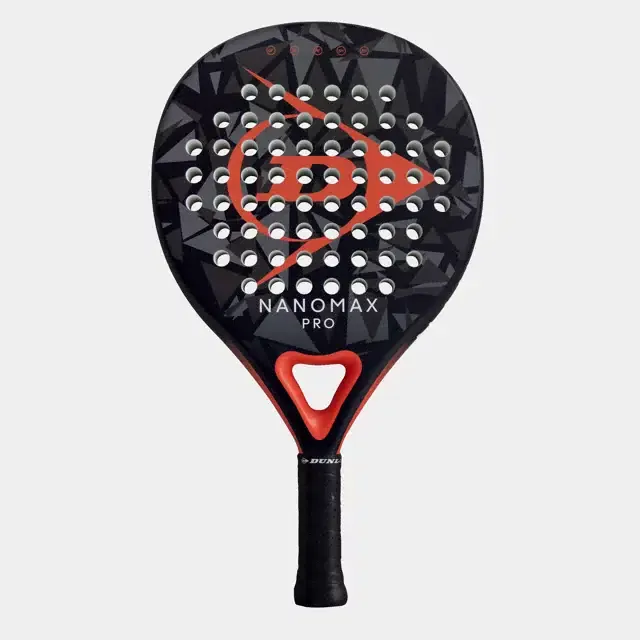
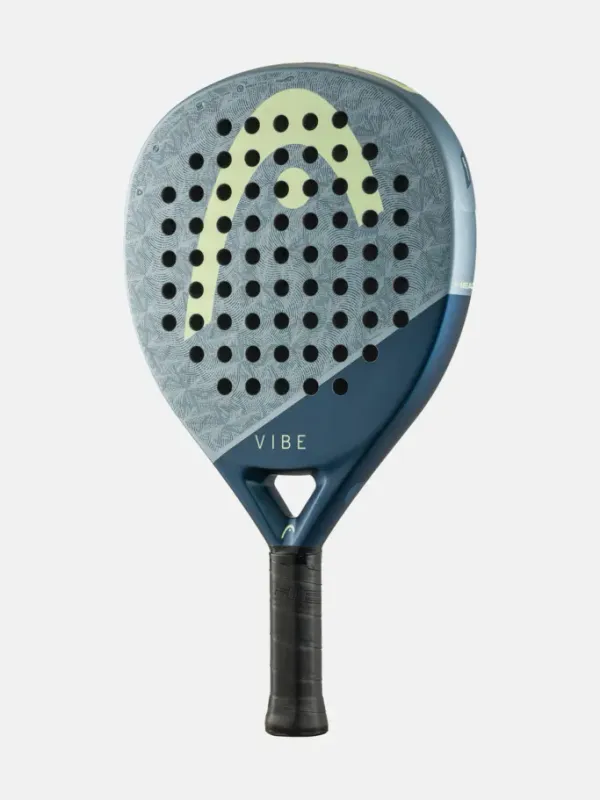
The Dunlop Nanomax Pro is ideal for intermediate all-round players who want a balanced 365 g racket with a medium core for solid stability across the court. The Head Vibe 2026 suits all-round players who prefer a lighter 350 g frame with a soft core and fiberglass face for maximum arm comfort and ease of maneuverability. In our assessment, both models offer an equal balance between power and control.
| Feature | Dunlop Nanomax Pro | Head Vibe 2026 |
|---|---|---|
| Season | Not stated | 2026 |
| Weight | 365 g | 350 g |
| Player level | Intermediate | Not stated |
| Core material | Pro EVA | Power Foam |
| Face material | Not stated | Fiberglass |
| Shape (our assessment) | Hybrid | Teardrop |
| Core hardness (our assessment) | Medium | Soft |
| Power vs Control scale (our assessment) | 3 | 3 |
| Sweet spot (our assessment) | Medium | Medium |
| Target player type (our assessment) | Allrounder | Allrounder |
Which one has more power?
In our assessment, both the Dunlop Nanomax Pro and the Head Vibe 2026 sit at a 3 on our 1 to 5 power versus control scale, making them balanced all-round options rather than pure power weapons. Neither racket will give you effortless off-the-chart power, but they deliver force in different ways based on their specifications.
The Dunlop Nanomax Pro weighs 365 g and uses a Pro EVA core, which gives it a medium core hardness in our assessment. The extra mass of 365 g provides natural inertia behind your swing. When playing attacking shots at the net, such as a smash or a heavy vibora, that additional weight helps transfer momentum into the ball, provided you have the technique to swing it cleanly.
By contrast, the Head Vibe 2026 comes in at a lighter 350 g and pairs a Power Foam core with a fiberglass face, resulting in a soft core hardness in our assessment. Because fiberglass is generally more flexible and the core is soft, the face deforms slightly more on contact, generating effortless rebound at lower swing speeds. However, on hard overhead smashes, the lighter weight means there is less physical mass moving through the impact. If you rely on weight and firm contact for power on your overheads, the Dunlop Nanomax Pro has the physical edge, even though we rate both at a balanced 3 for power versus control.
Which is easier to play?
Playability depends largely on weight, structural flexibility, and sweet spot size. In our assessment, both rackets feature a medium sweet spot, meaning neither model gives you an oversized forgiveness zone nor an unforgivingly small hit area.
Where the Head Vibe 2026 excels in ease of play is its low weight and soft feel. At 350 g, it is easy to maneuver quickly during defensive exchanges off the glass or rapid reflex volleys during net play. The soft core hardness (in our assessment) and fiberglass face absorb vibrations well, making it very comfortable on the arm. This softness also assists when defending from the back of the court, helping you push deep lobs without needing a full, forceful swing. Note that the official player level for the Head Vibe 2026 is not stated by the manufacturer.
The Dunlop Nanomax Pro weighs 365 g and is officially listed for intermediate players. Its medium core hardness in our assessment offers a firmer contact feel than the Head. While 365 g is a standard intermediate weight, it requires slightly more arm effort to move swiftly when defending off the glass compared to a 350 g frame. However, for intermediate players who want a predictable response on bandejas and controlled block volleys at the net, the Dunlop Nanomax Pro delivers steady feedback and dependable structure.
Who should buy which?
Dunlop Nanomax Pro
- Intermediate players looking for an officially categorized frame tailored to their skill level.
- All-round players who prefer a traditional 365 g weight for extra stability when hitting bandejas and smashes.
- Players who like a medium core hardness (in our assessment) and Pro EVA core for controlled, direct ball feedback.
Head Vibe 2026
- All-round players seeking a lightweight 350 g racket that is easy to move during fast net play.
- Players looking for arm comfort via a soft core hardness (in our assessment) and a flexible fiberglass face.
- Players who want a 2026 model featuring Power Foam construction.
Frequently asked questions
What is the main difference in weight between these two rackets?
According to the manufacturers, the Dunlop Nanomax Pro weighs 365 g, while the Head Vibe 2026 is lighter at 350 g.
How do the cores and face materials differ?
The Dunlop Nanomax Pro uses a Pro EVA core (its face material is not stated), yielding a medium core hardness in our assessment. The Head Vibe 2026 combines a Power Foam core with a fiberglass face, resulting in a soft core hardness in our assessment.
What player levels are these rackets designed for?
The manufacturer explicitly lists the Dunlop Nanomax Pro for intermediate players. The manufacturer level for the Head Vibe 2026 is not stated, though in our assessment both rackets suit an all-round playing style.