

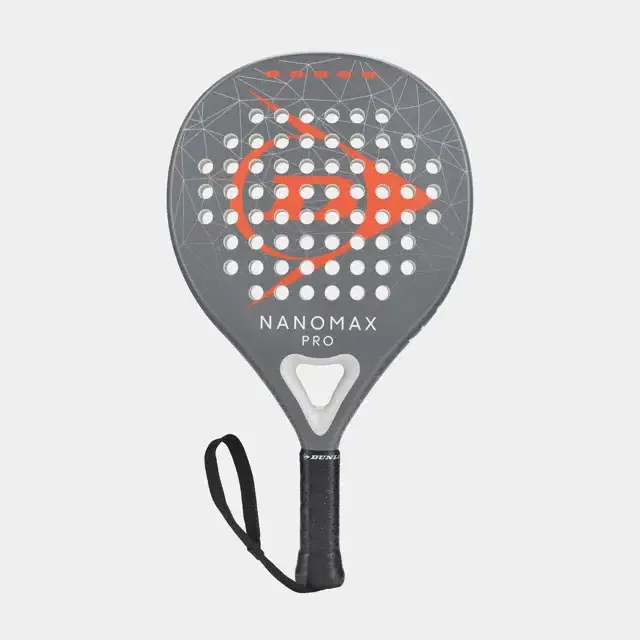
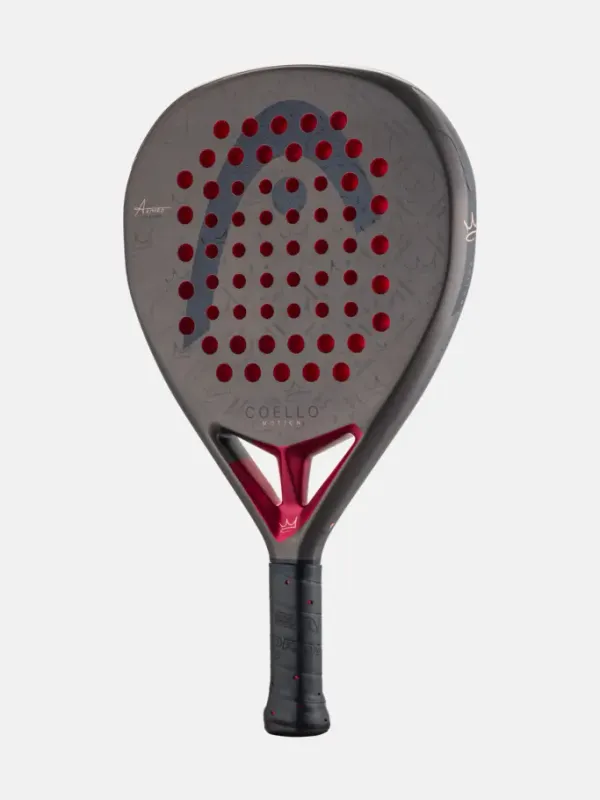
The Dunlop Nanomax Pro 2025 is best suited for intermediate all-round players who want a balanced blend of control and power across the entire court. Conversely, the Head Coello Motion 2026 is designed for advanced attacking players who prioritize offensive power and high balance at the net. If you require a forgiving setup for general play, the Dunlop is the better fit, while aggressive players will benefit more from the Head.
Key comparison table
| Feature | Dunlop Nanomax Pro 2025 | Head Coello Motion 2026 |
|---|---|---|
| Season | 2025 | 2026 |
| Target Level | Intermediate (mfr) | Advanced (our assessment) |
| Weight | 365 g | 360 g |
| Core Material | Pro EVA | Power Foam |
| Balance | Not stated | High |
| Face Material | Not stated | Carbon Hybrid |
| Shape (our assessment) | Hybrid | Diamond |
| Core Hardness (our assessment) | Medium | Soft |
| Power vs Control (our assessment) | 3 / 5 | 4 / 5 |
| Sweet Spot (our assessment) | Medium | Small |
| Player Type (our assessment) | Allrounder | Attacker |
Which racket offers more power?
When evaluating power potential, the Head Coello Motion 2026 holds a distinct advantage. In our assessment, we rate its power versus control at 4 out of 5 on our scale (where 1 represents pure control and 5 represents pure power). The manufacturer specifies a high balance for this model, and in our assessment, it features a diamond shape. These attributes place more weight toward the top of the frame, helping players generate leverage on overhead shots such as smashes and offensive viboras. Its Power Foam core combined with a Carbon Hybrid face provides substantial speed when accelerating through the ball.
In contrast, the Dunlop Nanomax Pro 2025 offers a more balanced performance profile. In our assessment, we rate its power versus control at 3 out of 5, indicating an even trade-off between power and precision. The manufacturer uses a Pro EVA core, while the balance and face material are not stated. In our assessment, its hybrid shape provides moderate power on drive shots and bandejas, but it lacks the head-heavy punch of a diamond shape. Players looking for maximum offensive output will find more raw power in the Head Coello Motion 2026.
Which racket is easier to control and defend with?
For defensive play off the back glass and reset shots, the Dunlop Nanomax Pro 2025 provides a more forgiving experience. In our assessment, it features a hybrid shape with a medium sweet spot and medium core hardness. This setup gives intermediate players a consistent response when defending under pressure, making it easier to execute controlled lob shots and placement bandejas. Although its manufacturer weight of 365 g is slightly heavier than the Head, its balanced shape characteristics prevent it from feeling overly heavy in defensive transitions.
The Head Coello Motion 2026 presents a bigger challenge in defensive scenarios. In our assessment, we rate its sweet spot as small and its core hardness as soft. While the lighter weight of 360 g specified by the manufacturer helps with swing speed, the combination of a high balance, diamond shape, and small sweet spot requires precise ball impact. Off-center hits behind the glass can result in unwanted errors or short balls. Advanced players with solid footwork and timing will handle these demands well, but intermediate or defensive-minded players may struggle to maintain consistent control.
How do they perform in different game situations?
At the net, the two rackets serve distinctly different tactical styles. The Head Coello Motion 2026 excels during aggressive net play. Left-side offensive players who like to finish points with heavy volleys, fast punch shots, and kick smashes will appreciate the head-heavy diamond design and Carbon Hybrid surface. Its 4 out of 5 power rating in our assessment allows players to dictate terms when attacking high balls above the net.
The Dunlop Nanomax Pro 2025 is better structured for building the point systematically from either the left or right side of the court. With a 3 out of 5 power versus control rating in our assessment, it gives all-round players the stability needed to block fast volleys, drop soft chiquitas at the opponents' feet, and maintain long rallies without overhitting. In terms of arm comfort, the Dunlop's medium core hardness with Pro EVA provides a predictable feel, whereas the Head uses soft Power Foam; however, manufacturer vibration dampening details are not stated for either model.
Who should buy which?
Choose the Dunlop Nanomax Pro 2025 if:
- You are an intermediate player looking for a versatile racket that balances power and control (rated 3 out of 5 in our assessment).
- You want an all-rounder profile with a medium sweet spot and medium core hardness.
- You value consistent control during defensive wall play and controlled bandejas.
- You prefer a hybrid shape racket weighing 365 g.
Choose the Head Coello Motion 2026 if:
- You are an advanced player looking for an aggressive offensive weapon.
- You play an attacking style, particularly on the left side of the court, relying on smashes and fast volleys.
- You want a diamond-shaped, high-balance racket with a 4 out of 5 power rating in our assessment.
- You can consistently hit a small sweet spot to capitalize on the Power Foam core and Carbon Hybrid face material.
Frequently asked questions
What is the power versus control rating for each racket?
In our assessment, we rate the Dunlop Nanomax Pro 2025 at 3 out of 5 for power versus control, representing a neutral balance. We rate the Head Coello Motion 2026 at 4 out of 5, leaning significantly toward power.
What are the core materials used in these rackets?
The manufacturer states that the Dunlop Nanomax Pro 2025 uses a Pro EVA core, which we assess as medium hardness. The Head Coello Motion 2026 uses Power Foam, which we assess as soft core hardness.
What is the balance and weight of both models?
The Dunlop Nanomax Pro 2025 weighs 365 g according to the manufacturer, though its balance is not stated. The Head Coello Motion 2026 weighs 360 g and features a high balance as specified by the manufacturer.