

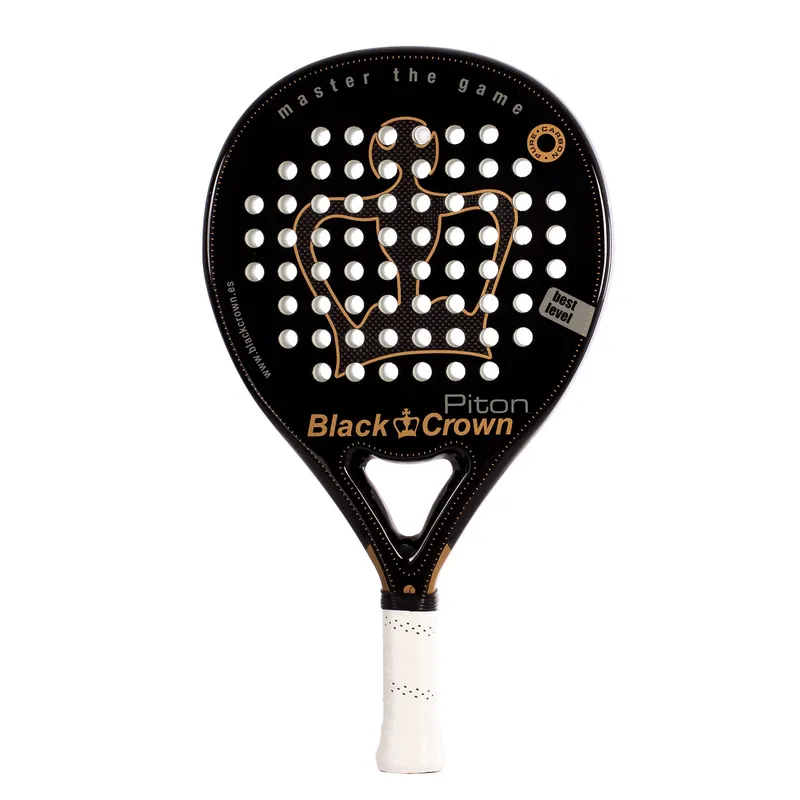
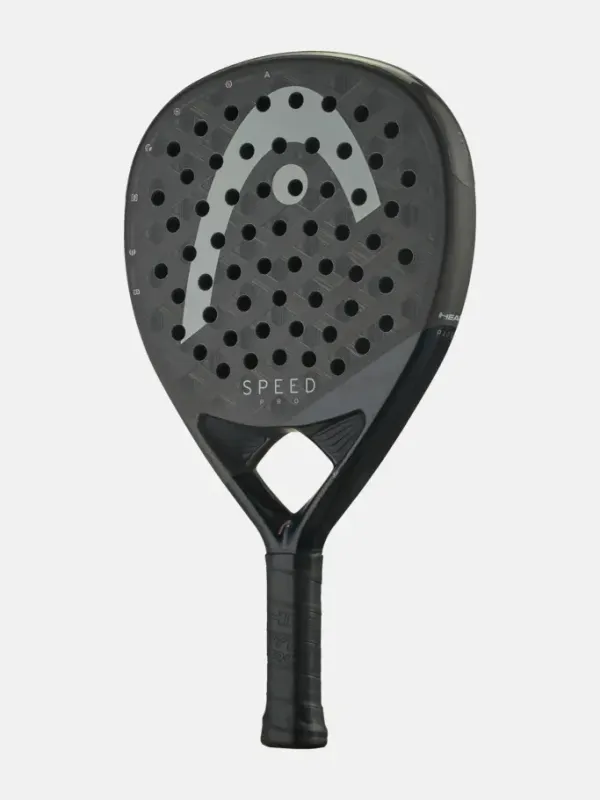
The Black Crown Piton 2026 is best suited for advanced game builders and counter-players who prioritize a large sweet spot, a round shape, and a balanced power-to-control ratio. Conversely, the Head Speed Pro 2025 targets advanced attacking players who want elevated leverage from a high balance and power-oriented setup. Choosing between them depends on whether your tactical focus rests on baseline control and patient placement or aggressive net play and finishing power.
| Specification | Black Crown Piton 2026 | Head Speed Pro 2025 |
|---|---|---|
| Season | 2026 | 2025 |
| Shape | Round | Teardrop (our assessment) |
| Balance | Not stated | High |
| Weight | 355–370 g | 370 g |
| Frame Material | Tubular carbono | Not stated |
| Face Material | Not stated | Hybrid Woven |
| Core Material | Medium White Eva | Power Foam |
| Player Level | Advanced | Advanced (our assessment) |
| Core Hardness (our assessment) | Medium (our assessment) | Soft (our assessment) |
| Power vs Control (our assessment) | 3 / 5 (our assessment) | 4 / 5 (our assessment) |
| Sweet Spot (our assessment) | Large (our assessment) | Medium (our assessment) |
| Player Types (our assessment) | Builder, Counter (our assessment) | Attacker (our assessment) |
Which one has more power?
When comparing offensive capability, the Head Speed Pro 2025 holds a distinct edge. In our assessment, we rate the Head Speed Pro 2025 at a 4 out of 5 on our power-versus-control scale, leaning firmly toward a power-oriented profile. The manufacturer equips this racket with a high balance, a 370 g weight, and a Power Foam core. In active play scenarios such as aggressive smashes or driven viboras from the transition zone, the higher balance helps generate extra racket head speed and mass behind the ball.
In contrast, we rate the Black Crown Piton 2026 at a 3 out of 5 on our power-versus-control scale, representing a central equilibrium between power and control. While its weight of 355–370 g and tubular carbono frame provide structural stability, its round shape distributes weight lower down. On overheads like a defensive bandeja or dynamic chiquita, it delivers predictable power rather than raw punch, requiring the player to supply more physical muscle to match the overhead pace of the Head model.
Which is easier to play?
Ease of play largely comes down to sweet spot size, shape geometry, and balance. The Black Crown Piton 2026 features a round shape direct from the manufacturer, and in our assessment, it boasts a large sweet spot with a medium core hardness derived from its Medium White Eva core. This forgiving sweet spot makes defending off the glass and blocking fast volleys at the net notably straightforward. Players placed under pressure in back-glass defense will appreciate the extra margin for error on off-center hits.
The Head Speed Pro 2025 requires more refined technique. In our assessment, it features a teardrop shape, a soft core hardness, and a medium sweet spot. Combined with its manufacturer-specified high balance and fixed 370 g weight, handling this model in deep defensive situations off the wall demands strong wrist stability and clean impact. However, the soft Power Foam core aids in ball output when absorbing fast incoming shots at the net.
How do their materials and construction compare?
The structural builds of these two models cater to distinct physical feel preferences. The Black Crown Piton 2026 utilizes a tubular carbono frame combined with a Medium White Eva core. The brand has not stated the specific material used on the face. In our assessment, this combination creates a medium core hardness that gives a crisp, stable feel upon ball impact without being overly rigid.
The Head Speed Pro 2025 uses a Hybrid Woven face material paired with a Power Foam core. The manufacturer has not stated the frame construction material. In our assessment, the core hardness rates as soft. This construction produces a cushioned response on contact, providing high trampoline effect from the soft core combined with surface durability from the hybrid face material.
Who should buy which?
Black Crown Piton 2026
- Right-side players and builders: Ideal for tactical players who build rallies patiently with accurate bandejas and low chiquitas.
- Counter-attackers: Suits players who rely on precise baseline lobbing and sharp placement off the glass to turn defense into offense.
- Players seeking forgiveness: Excellent for advanced players who want a round shape and a large sweet spot (our assessment) to minimize errors during high-speed exchanges.
- Arm comfort seekers: The medium core hardness and standard balance setup provide balanced feedback without extra weight shifted toward the head.
Head Speed Pro 2025
- Left-side attackers: Tailored for aggressive players who spend maximum time at the net looking to close out points with overhead smashes.
- High-balance enthusiasts: Designed for players who favor a top-heavy teardrop shape (our assessment) to increase leverage on offensive shots.
- Power Foam users: Perfect for those who prefer the high energy return and soft feel (our assessment) of Power Foam over traditional medium EVA cores.
- Physically strong advanced players: Demands solid arm technique to maneuver a high-balanced 370 g racket effectively in quick net duels.
Frequently asked questions
Which player level are these rackets designed for?
The Black Crown Piton 2026 is officially specified by the manufacturer for advanced players. The Head Speed Pro 2025 does not state a manufacturer player level, but in our assessment, it is also targeted at advanced players due to its high balance and attack-focused design.
What are the main weight and balance differences?
The Black Crown Piton 2026 has a weight range of 355–370 g, but its manufacturer balance is not stated. The Head Speed Pro 2025 has a fixed weight of 370 g and an officially stated high balance.
How do the sweet spots compare between the two models?
In our assessment, the Black Crown Piton 2026 offers a large sweet spot owing to its round shape. In our assessment, the Head Speed Pro 2025 features a medium sweet spot typical of high-balanced teardrop models.