

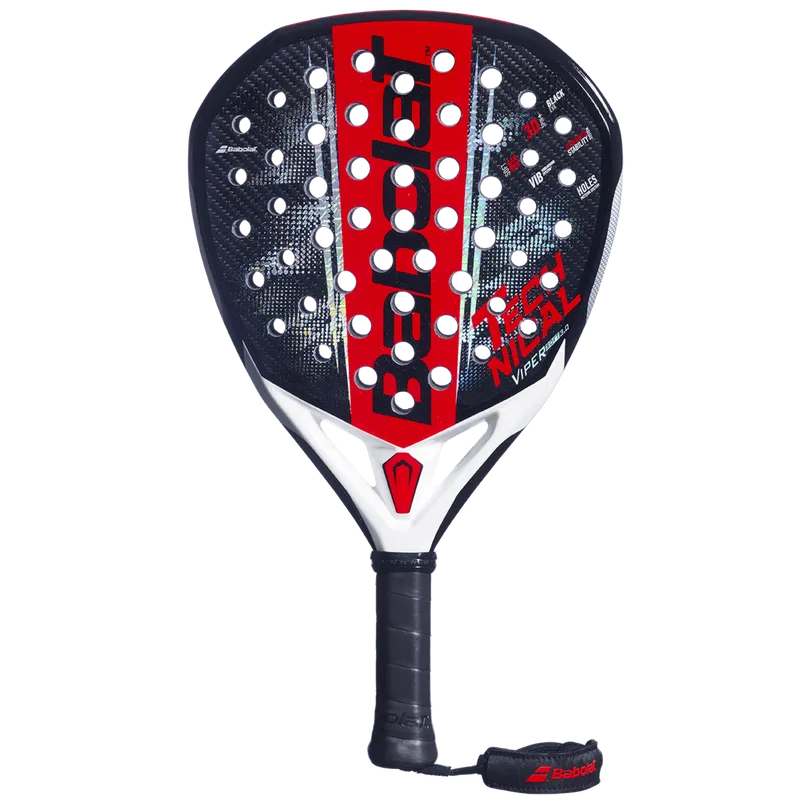
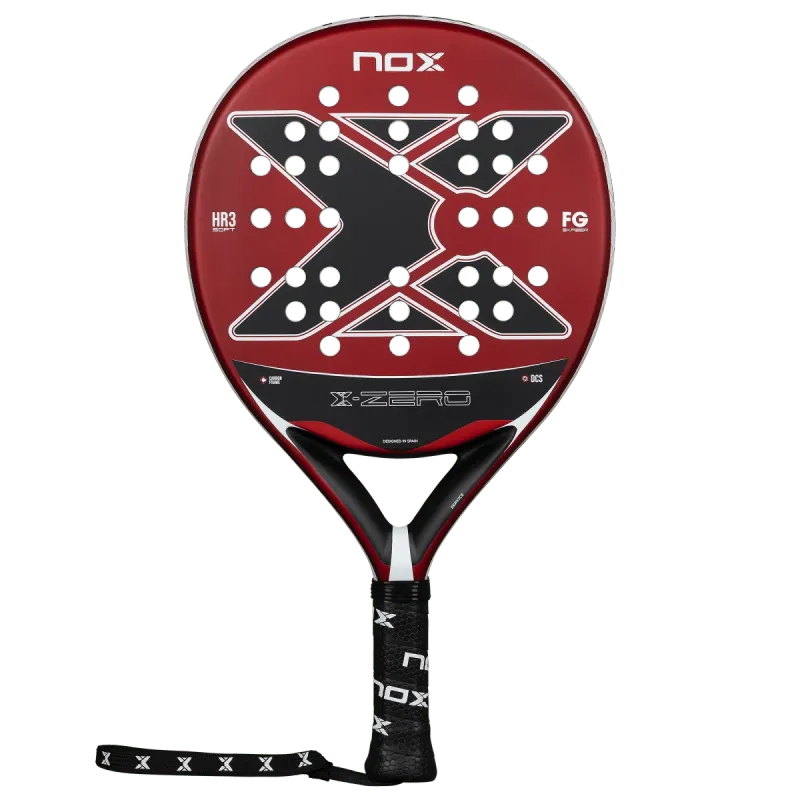
The Babolat Technical Viper is tailored for high-level attacking players seeking maximum power on offensive shots like smashes and aggressive viboras. In contrast, the NOX X-Zero is built for beginner players focused on control and consistency, offering an accessible feel for game builders and defensive counter-attackers. Selecting between them depends on whether you need a high-power weapon for the left side of the court or a forgiving option to learn the basics.
| Feature | Babolat Technical Viper | NOX X-Zero |
|---|---|---|
| Target level (manufacturer) | Pro | Beginner |
| Shape (manufacturer) | Diamond | Round |
| Balance (manufacturer) | High | Not stated |
| Weight (manufacturer) | 370 g | 350–360 g |
| Frame material (manufacturer) | Carbon 16K/3K | Not stated |
| Face material (manufacturer) | Not stated | Fiber Glass 3K |
| Core material (manufacturer) | Hard | Not stated |
| Core hardness (our assessment) | Hard | Not stated |
| Power vs control (our assessment) | 5 (Pure power) | Not stated |
| Sweet spot (our assessment) | Small | Large |
| Player types (our assessment) | Attacker | Builder, Counter |
Which racket offers more power at the net?
When playing aggressive shots at the net, the Babolat Technical Viper stands out significantly. In our assessment, we rate the Technical Viper at 5 out of 5 on our power versus control scale, placing it in the pure power category. This assessment is supported by its official manufacturer specifications: a diamond shape, a high balance, a 370 g overall weight, and a hard core. Combined with a Carbon 16K/3K frame, these characteristics provide an unyielding surface that transfers strong force into the ball, making it ideal for flat smashes, sharp viboras, and heavy bandejas.
The NOX X-Zero takes a completely different approach. The manufacturer specs outline a round shape, a lower weight range of 350–360 g, and a Fiber Glass 3K face. The manufacturer does not state the core material, frame material, or balance for the NOX X-Zero, and we do not have an assessment rating for its power output. However, because fiberglass is generally more flexible than carbon, and round rackets distribute weight closer to the handle, the NOX X-Zero is not designed for heavy power play at the net.
Which racket is easier to play and control?
Ease of play and defensive reliability depend heavily on shape, weight distribution, and sweet spot size. In our assessment, the NOX X-Zero features a large sweet spot, which makes it forgiving when hitting off-center balls. Combined with its round shape and lighter weight of 350–360 g, it allows players to comfortably maneuver when defending off the glass or attempting controlled lob shots from the back of the court. Manufacturer specs classify the NOX X-Zero for beginner players, making it a suitable tool for learning fundamental stroke mechanics.
By contrast, the Babolat Technical Viper is much more demanding. In our assessment, we rate its sweet spot as small, meaning off-center hits offer little forgiveness. Its heavy 370 g frame, high balance, and hard core demand good physical technique and precise timing. While it excels at high-speed attacking play, defending low balls near the glass requires strong arm strength and fast reaction times.
How do materials and structural specs compare?
The structural designs of these two rackets cater to entirely distinct player profiles. According to manufacturer specifications, the Babolat Technical Viper features a Carbon 16K/3K frame paired with a hard core, high balance, and diamond geometry. In our assessment, we evaluate its core hardness as hard. These specs create a rigid, top-heavy tool designed for structural stability during aggressive overheads.
On the other hand, manufacturer facts for the NOX X-Zero highlight a Fiber Glass 3K face and a round geometry. Several key specifications for the NOX X-Zero are missing from official manufacturer data: frame material, core material, and balance are not stated. Furthermore, in our assessment, core hardness and power versus control ratings are not stated for the NOX X-Zero. The reliance on Fiber Glass 3K on the face offers a softer feel compared to carbon frames, prioritizing comfort over structural rigidity.
Who should buy which?
Babolat Technical Viper
- Advanced and professional players who require a high-performance attacking racket.
- Attackers who typically play on the left side of the court and want to finish points at the net.
- Players who consistently rely on powerful smashes, bandejas, and aggressive viboras.
- Competitors who can handle a heavy 370 g frame with a high balance, hard core, and small sweet spot.
NOX X-Zero
- Beginner players looking for an accessible racket to build fundamental skills.
- Game builders and counter-attackers who prioritize ball placement and defensive consistency.
- Players who need a forgiving frame with a large sweet spot (in our assessment) for extended rallies.
- Players seeking a lighter weight (350–360 g) and a round shape that aids maneuverability off the glass.
Frequently asked questions
Is the Babolat Technical Viper suitable for beginners?
No. The manufacturer classifies the Babolat Technical Viper for pro-level players. In our assessment, it features a small sweet spot, a hard core, and a 5 out of 5 pure power rating. Its high balance and 370 g weight make it too demanding for beginners.
What is the balance and core material of the NOX X-Zero?
The manufacturer does not state the balance, core material, or frame material for the NOX X-Zero. In our assessment, the core hardness and power-to-control rating are also not stated.
Which racket is better for defending off the glass?
In our assessment, the NOX X-Zero features a large sweet spot, which, combined with its manufacturer-stated round shape and 350–360 g weight, makes it easier to defend off the glass. The Babolat Technical Viper has a small sweet spot and high balance, making quick defensive maneuvers more difficult.