

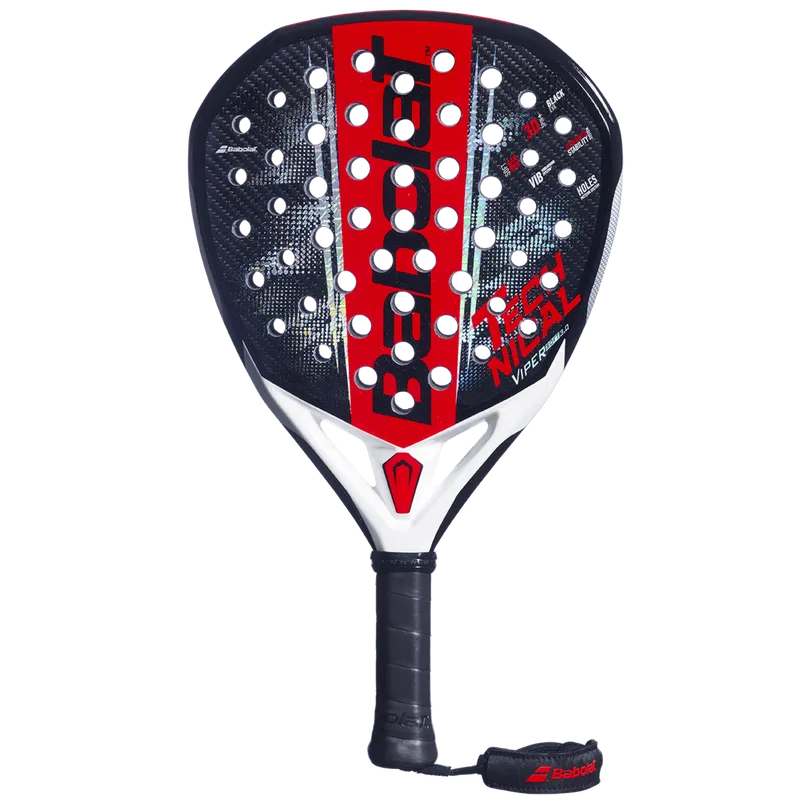
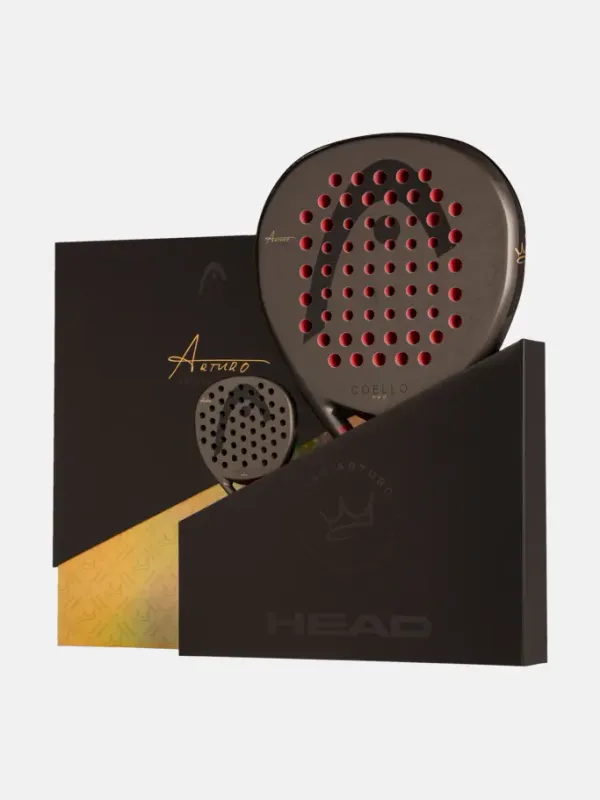
The Babolat Technical Viper is designed for pro-level offensive players seeking maximum power with a firm, rigid feel. The Head Coello Pro 2026 is aimed at intermediate attackers who want explosive overhead performance paired with a softer core touch. Both high-balance, 370-gram rackets favor aggressive players on the left side of the court looking to dominate at the net.
| Feature / Specification | Babolat Technical Viper | Head Coello Pro 2026 |
|---|---|---|
| Season | Not stated | 2026 |
| Shape | Diamond | Diamond (our assessment) / Not stated by manufacturer |
| Balance | High | High |
| Weight | 370 g | 370 g |
| Frame Material | Carbon 16K/3K | Not stated |
| Face Material | Not stated | Carbon Hybrid |
| Core (Manufacturer) | Hard | Power Foam |
| Core Hardness (our assessment) | Hard | Soft |
| Recommended Level | Pro (Manufacturer) | Intermediate (our assessment) / Not stated by manufacturer |
| Power vs Control (our assessment) | 5 (Pure Power) | 5 (Pure Power) |
| Sweet Spot (our assessment) | Small | Small |
| Target Player Types (our assessment) | Attacker | Attacker |
Which one has more power?
When comparing raw offensive capability, both models share our maximum power assessment rating of 5 out of 5. Each racket is engineered purely for power, combining a high balance with a total weight of 370 grams. This top-heavy weight distribution generates massive momentum on high-impact shots, making both rackets formidable tools for finishing points with smashes, deep aggressive bandejas, and sharp viboras.
The fundamental difference lies in how that power is delivered through their core structures. The Babolat Technical Viper uses a hard core (stated by the manufacturer and evaluated as hard in our assessment) along with a Carbon 16K/3K frame. This produces a stiff, dry impact where energy is directly transferred into the ball without dampening. On the other hand, the Head Coello Pro 2026 features a Power Foam core—which we rate as soft in our assessment—combined with a Carbon Hybrid face. While the head-heavy weight distribution and pure power score remain identical, the softer core in the Head racket offers a different feel on impact compared to Babolat's stiff construction.
Which is easier to play and control?
Neither of these rackets is built for easy handling or effortless touch. In our assessment, both the Babolat Technical Viper and the Head Coello Pro 2026 feature a small sweet spot. Off-center hits require precise technique, meaning players must contact the ball cleanly to maintain control and depth.
In defensive scenarios, such as retrieving low balls off the back glass, both frames demand solid physical effort. Their high balance and 370-gram weight shift the mass toward the head, which reduces swift maneuverability during quick wrist adjustments. When forced to defend deep in the court, players will find that neither racket is built to forgive late timing or poor footwork.
Regarding arm comfort, the core differences are key. The Babolat Technical Viper’s hard core and rigid frame offer minimal shock absorption, placing higher demands on the player's arm and joint stability. Conversely, because we rate the Head Coello Pro 2026 as having a soft core hardness, its Power Foam interior provides a more cushioned impact feel during fast exchanges.
How do they handle at the net and in overhead situations?
At the net, both frames perform at their best when accelerating through the ball. Aggressive volleys can be hit with tremendous pace thanks to the 370-gram weight and head-heavy balance. Left-side court players who constantly push forward to finish points will appreciate the mass behind drive volleys and overhead strikes.
In overhead situations like the smash or fast vibora, both rackets allow players to fully capitalize on their top-heavy balance. The Babolat Technical Viper rewards players who swing fast and hit clean, providing solid, stiff feedback off its carbon frame and hard core. The Head Coello Pro 2026 relies on its Carbon Hybrid face and soft Power Foam core to yield quick ball output, letting aggressive attackers crush overheads effectively.
Who should buy which?
Babolat Technical Viper:
- Pro-level players who require an uncompromising, hard-feeling racket for maximum power.
- Attackers positioned primarily on the left side of the court who rely on heavy smashes and fast volleys.
- Players comfortable managing a small sweet spot, high balance, and a 370-gram frame with Carbon 16K/3K materials.
Head Coello Pro 2026:
- Intermediate attacking players looking for a 5 out of 5 power rating combined with a soft core feel.
- Players seeking a 2026 season model featuring a Carbon Hybrid face, Power Foam core, and high balance.
- Offensive players who want a diamond shape (in our assessment) and heavy overhead output without an overly rigid core.
Frequently asked questions
What is the main difference in core feel between these two rackets?
The Babolat Technical Viper features a hard core according to the manufacturer, which we also rate as hard in our assessment. The Head Coello Pro 2026 incorporates a Power Foam core, which we assess as soft in core hardness.
Are these rackets suitable for defensive players or beginners?
No. We rate both rackets as a 5 out of 5 for power with a small sweet spot. Combined with their high balance and 370-gram weight, both frames are engineered specifically for attacking styles rather than defensive control or beginner-level play.
What specs are not stated by the manufacturers?
Babolat does not state the season or face material for the Technical Viper. Head does not state the official racket shape, frame material, or recommended player level for the Coello Pro 2026, though we rate its shape as diamond and level as intermediate in our assessment.