

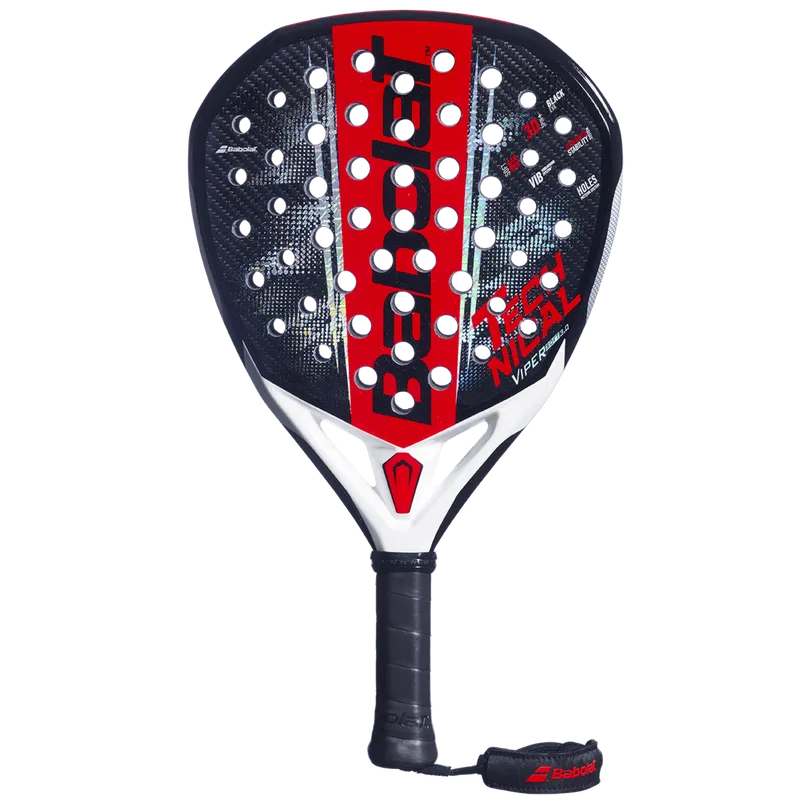
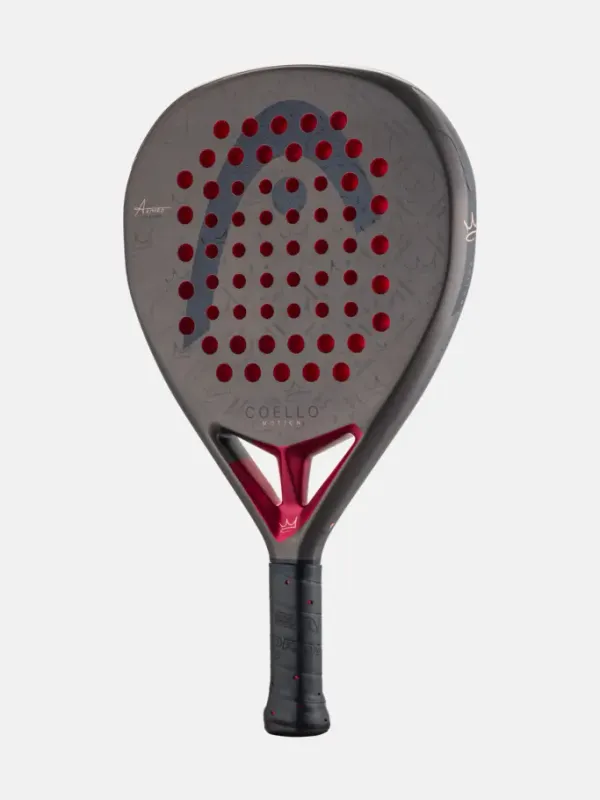
The Babolat Technical Viper is built for pro-level attacking players seeking ultimate overhead power through a heavy 370 g diamond frame with high balance and a hard core feel. The Head Coello Motion 2026 offers an alternative for advanced attackers, pairing a lighter 360 g build and high balance with a soft core feel. Choose the Technical Viper if you have the physical strength to drive maximum smash output, or the Coello Motion 2026 if you want high offensive capability with a lighter, slightly more manageable setup.
| Feature | Babolat Technical Viper | Head Coello Motion 2026 |
|---|---|---|
| Season | Not stated | 2026 |
| Shape | Diamond | Diamond (our assessment) |
| Balance | High | High |
| Weight | 370 g | 360 g |
| Frame Material | Carbon 16K/3K | Not stated |
| Face Material | Not stated | Carbon Hybrid |
| Core Material | Hard | Power Foam |
| Player Level | Pro | Advanced (our assessment) |
| Core Hardness (our assessment) | Hard | Soft |
| Power vs Control (our assessment) | 5 / 5 | 4 / 5 |
| Sweet Spot (our assessment) | Small | Small |
| Target Player Types (our assessment) | Attacker | Attacker |
Which racket offers more power?
When evaluating raw attacking potential, the Babolat Technical Viper takes the edge. In our assessment, we rate its power versus control at a maximum 5 out of 5, placing it squarely as a pure power racket. The combination of its 370 g weight, high balance, and hard core allows pro-level players to generate massive ball speed on smashes and aggressive viboras from the back court.
The Head Coello Motion 2026 is also built for offensive play, but in our assessment, we rate its power versus control at 4 out of 5. It features high balance and a Power Foam core, but its static weight is 360 g—10 grams lighter than the Babolat. While it produces impressive output on aggressive shots at the net, it sacrifices a small degree of maximum momentum compared to the heavier Technical Viper. Left-side players looking for absolute top-end force will favor the Technical Viper, whereas those wanting high power without swinging a heavier frame will lean toward the Coello Motion 2026.
Which is easier to play and maneuver?
In our assessment, both rackets feature a small sweet spot, meaning neither model provides forgiving off-center hits. Offense is the primary objective for both, but maneuverability differs based on weight and core characteristics.
The Head Coello Motion 2026 weighs 360 g, which allows for faster racket head speed during quick volley exchanges at the net and easier reaction times when defending off the glass. In our assessment, its core hardness is soft, providing a softer impact feeling when absorbing incoming pace.
The Babolat Technical Viper weighs 370 g with a high balance, making it noticeably more demanding on the arm during extended defensive rallies. In our assessment, its core hardness is hard, offering a direct impact feel with minimal shock absorption. Players defending deep in the court may find the Head Coello Motion 2026 easier to move into position, while the Technical Viper requires excellent technique and physical strength to manage effectively.
How do the materials and construction compare?
The technical construction highlights different design approaches from each manufacturer. Babolat specifies a Carbon 16K/3K frame combined with a hard core, yielding a rigid, crisp feel on hit. Babolat officially classifies the racket shape as diamond. The manufacturer does not state the face material or season for this model.
Head uses a Carbon Hybrid face paired with a Power Foam core for the Coello Motion 2026 model year. Head does not state the frame material, racket shape, or player level officially. However, in our assessment, we classify the Coello Motion 2026 as a diamond shape and rate its core hardness as soft.
The contrast in impact feel comes down to these material profiles: the Technical Viper relies on hard core density and stiff carbon framing for instant power transfer, whereas the Coello Motion 2026 combines Carbon Hybrid facing with soft Power Foam density for energy rebound.
Who should buy which?
Babolat Technical Viper is best for:
- Pro-level left-side players who prioritize absolute power on smashes and aggressive overheads.
- Physically strong players who can easily handle a heavy 370 g frame with high balance.
- Attackers who prefer a crisp, hard core feel with direct ball feedback.
Head Coello Motion 2026 is best for:
- Advanced attacking players looking for high offensive power in a lighter 360 g package.
- Players who want high balance for aggressive bandejas and net play but prefer a soft core touch.
- Attackers seeking slightly easier maneuverability during fast wall rebounds and net exchanges.
Frequently asked questions
What are the player levels for these rackets?
The Babolat Technical Viper is officially classified for pro players by the manufacturer. The Head Coello Motion 2026 does not have an official manufacturer player level stated, but in our assessment, we rate it as suitable for advanced players.
What are the primary trade-offs between these two models?
The main trade-off comes down to weight, core hardness, and power ceiling. The Babolat Technical Viper provides maximum power (5/5 in our assessment) and a hard impact feel at 370 g, requiring strong physical conditioning. The Head Coello Motion 2026 is 10 grams lighter (360 g) with a soft core feel and high power (4/5 in our assessment), making it slightly easier to handle while providing slightly less peak overhead force.
Are these rackets suitable for defensive control players?
No. In our assessment, both rackets are designed specifically for attackers and feature high balance along with small sweet spots. Defensive players or right-side tacticians looking for maximum control, low balance, or large sweet spots will likely find both rackets too demanding and power-focused.