

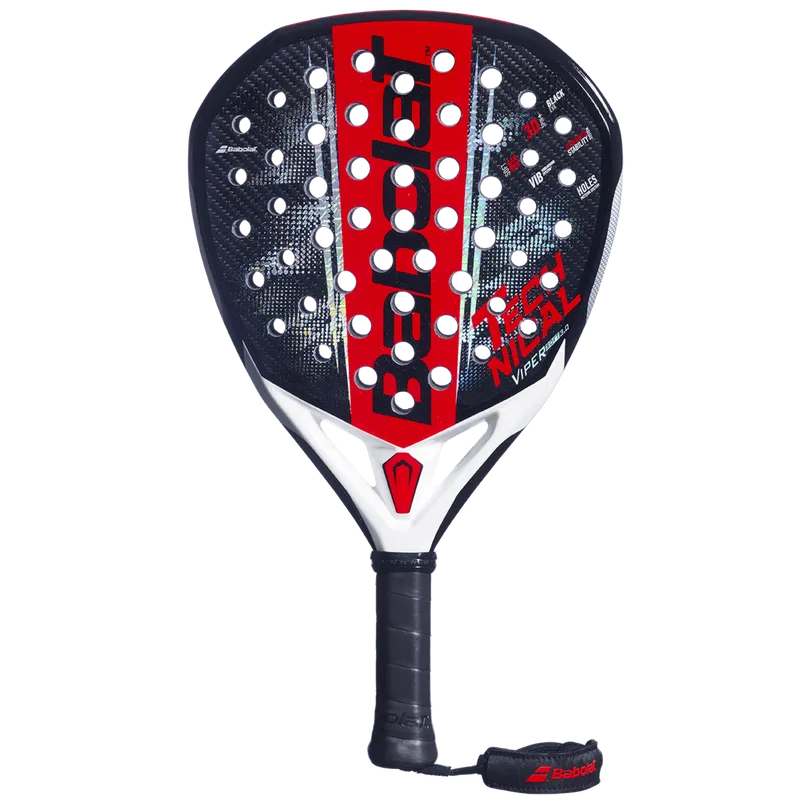
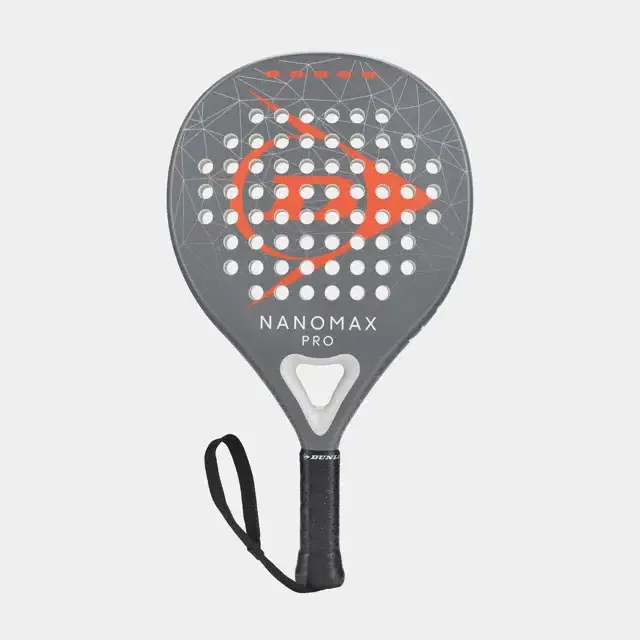
The Babolat Technical Viper is engineered for advanced, attack-minded players who demand maximum power on offensive shots. In contrast, the Dunlop Nanomax Pro 2025 offers a balanced performance tailored for intermediate allrounders seeking versatility across all court zones. Determining which racket fits your game depends on whether you require explosive power or an adaptable, forgiving build.
| Feature | Babolat Technical Viper | Dunlop Nanomax Pro 2025 |
|---|---|---|
| Targeted Player Level | Pro | Intermediate |
| Season | Not stated | 2025 |
| Weight | 370 g | 365 g |
| Frame Material | Carbon 16K/3K | Not stated |
| Core Material (Manufacturer) | Hard | Pro EVA |
| Manufacturer Shape | Diamond | Not stated |
| Manufacturer Balance | High | Not stated |
| Assessed Shape (our assessment) | Diamond | Hybrid |
| Assessed Core Hardness (our assessment) | Hard | Medium |
| Assessed Sweet Spot (our assessment) | Small | Medium |
| Power vs Control Rating (our assessment) | 5 / 5 (Pure Power) | 3 / 5 (Balanced) |
| Player Type Profile (our assessment) | Attacker | Allrounder |
Which racket delivers more power on attacking shots?
When taking the initiative at the net, the Babolat Technical Viper provides maximum offensive potential. Stated by Babolat with a diamond shape, high balance, a 370 g weight, and a hard core, this racket is constructed to generate heavy pace on smashes, kick smashes, and aggressive viboras. In our assessment, we rate its power-versus-control balance at 5 out of 5 on our scale, placing it firmly in the pure power category. Its Carbon 16K/3K frame construction further adds structural rigidity to overhead strikes.
The Dunlop Nanomax Pro 2025 takes a more moderate approach to offensive play. Weighing 365 g and utilizing a Pro EVA core, it provides reliable output without an extreme weight bias. In our assessment, we rate its power-versus-control balance at 3 out of 5, indicating an equal balance between offensive output and defensive precision. While it allows intermediate players to execute effective bandejas and controlled put-away shots at the net, it does not match the overhead power potential of the Technical Viper.
Which racket offers better control and playability?
In defensive scenarios and transition play, playability varies significantly between these two models. The Dunlop Nanomax Pro 2025 is designed for intermediate players, making it noticeably more forgiving during long rallies. In our assessment, its core hardness is medium and its sweet spot is medium-sized. Additionally, in our assessment, its shape is hybrid. These characteristics help players when defending off the glass, block-volleying, or executing controlled lob shots under pressure.
By contrast, the Babolat Technical Viper is tailored specifically for pro-level players. In our assessment, its core is hard and its sweet spot is small. Combined with its high balance and 370 g weight, off-center hits off the glass or tight defensive digs from the back of the court require precise technique and solid arm conditioning. If a player misses the small sweet spot, depth control drops off quickly. For players with refined mechanics, however, this rigidity offers high stability at the net.
How do structural specifications compare?
The physical specifications highlight distinct target audiences and manufacturing approaches. Babolat provides detailed structural specs for the Technical Viper, including a high balance point, diamond geometry, a 370 g weight, and a frame made of Carbon 16K/3K. Its official release season is not stated.
For the Dunlop Nanomax Pro 2025, Dunlop states that it belongs to the 2025 season, weighs 365 g, features a Pro EVA core, and targets intermediate players. However, Dunlop does not state official manufacturer specifications for the frame material, racket shape, or balance point. In our assessment, we categorize its shape as hybrid, its core hardness as medium, and its sweet spot as medium-sized to provide players with an objective structural overview.
Who should buy which racket?
Choose the Babolat Technical Viper if you:
- Play at a pro or advanced skill level.
- Occupy the left side of the court as a primary attacker.
- Demand maximum overhead power (rated 5/5 in our assessment) for smashes and aggressive viboras.
- Have the technical precision to handle a high balance, 370 g weight, and a small sweet spot.
Choose the Dunlop Nanomax Pro 2025 if you:
- Play at an intermediate skill level.
- Seek a balanced allrounder racket suitable for both right-side and left-side play.
- Prefer a medium core hardness and medium sweet spot that provide forgiveness when defending off the glass.
- Want a 365 g racket that balances control and power evenly (rated 3/5 in our assessment).
Frequently asked questions
What is the power versus control rating for each racket?
In our assessment, the Babolat Technical Viper achieves a 5 out of 5 power-versus-control rating, categorizing it as a pure power racket. In our assessment, the Dunlop Nanomax Pro 2025 receives a 3 out of 5 rating, offering an even balance between power and control.
Which racket is easier to manage when defending off the glass?
The Dunlop Nanomax Pro 2025 is generally easier to handle when defending from the back of the court. In our assessment, it features a medium sweet spot and medium core hardness, combined with its 365 g intermediate design. In our assessment, the Babolat Technical Viper has a small sweet spot, high balance, and hard core, requiring advanced precision when defending off the glass.
What frame material is used in the Dunlop Nanomax Pro 2025?
The frame material for the Dunlop Nanomax Pro 2025 is not stated by the manufacturer. Only the core material is specified by Dunlop as Pro EVA.