

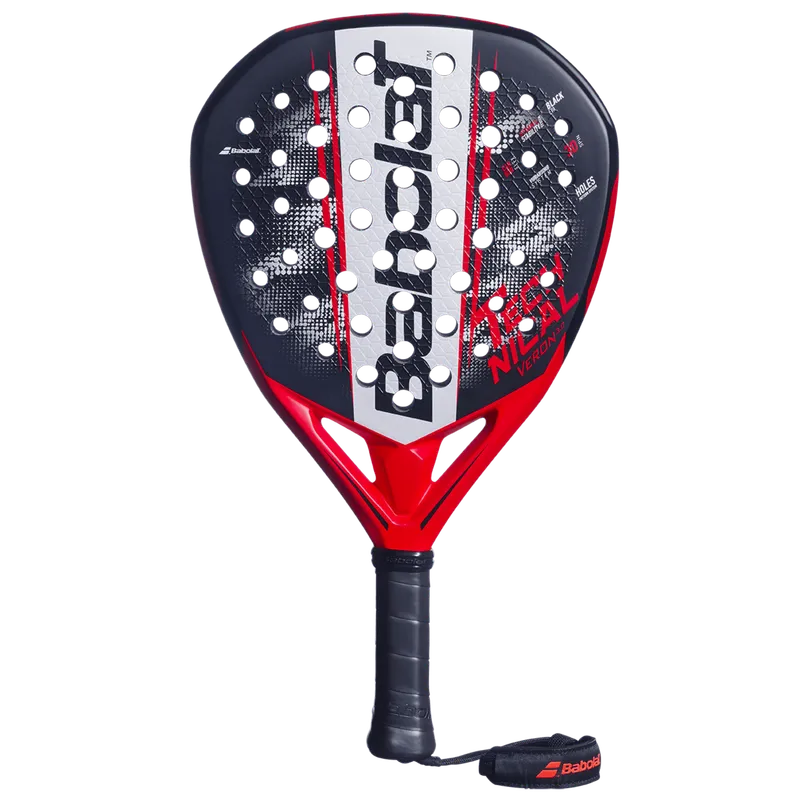
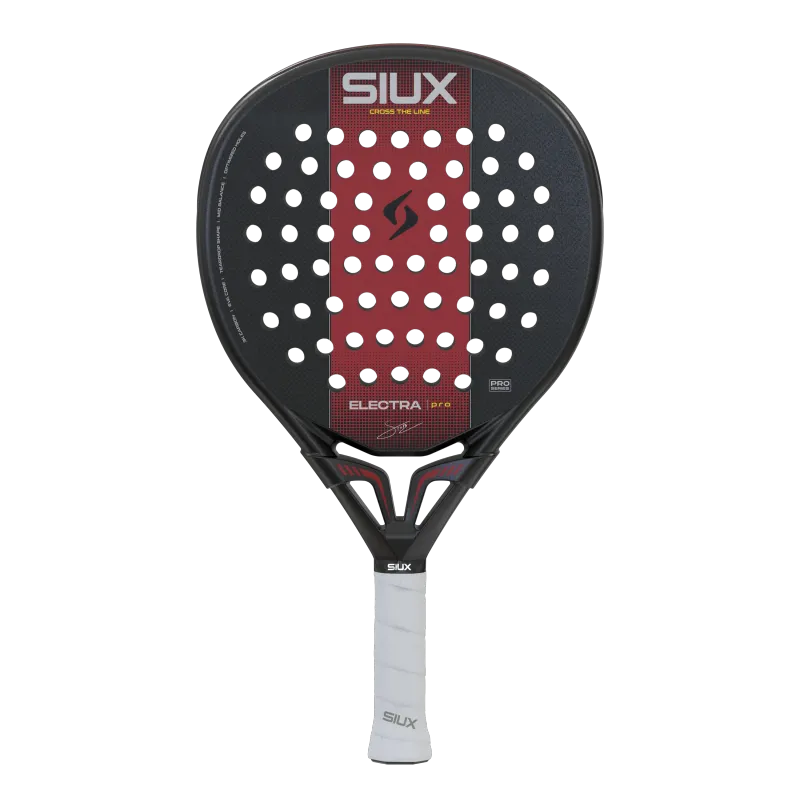
The Babolat Technical Veron 3.0 2026 is built for advanced attacking players who want high-balance overhead power for aggressive finishing at the net. In contrast, the Siux Electra Pro suits advanced allrounders who prefer an even balance and a teardrop shape for balanced performance across all zones of the court. Choosing between them depends on whether you seek specialized offensive weight distribution or versatile all-court playability.
| Feature / Specification | Babolat Technical Veron 3.0 2026 | Siux Electra Pro |
|---|---|---|
| Season | 2026 | Not stated |
| Racket Shape | Diamond (our assessment) | Teardrop |
| Balance | High | Even |
| Weight | 360 g | 355–375 g |
| Profile Thickness | 38 mm | Not stated |
| Face Material | Carbon Flex | Not stated |
| Frame Material | Carbon | Carbon 12K |
| Core Material | Black EVA | Hard |
| Core Hardness (our assessment) | Medium | Hard |
| Target Level | Advanced (our assessment) | Advanced |
| Power vs Control (our assessment) | 4 / 5 | 4 / 5 |
| Sweet Spot (our assessment) | Small | Medium |
| Recommended Player Type (our assessment) | Attacker | Allrounder |
Which one offers more power on aggressive shots?
In our assessment, both the Babolat Technical Veron 3.0 2026 and the Siux Electra Pro reach a 4 out of 5 rating on our power versus control scale, but they generate offensive output differently due to their physical specifications. The Babolat Technical Veron 3.0 2026 features a high balance weight distribution, a 360 g static weight, and an assessed diamond shape. This high balance creates extra dynamic leverage on overhead strokes, allowing attacking players to generate substantial head speed during aggressive smashes and steep viboras. Its core is constructed from Black EVA, which we rate as medium hardness, paired with a Carbon Flex face and a carbon frame across a standard 38 mm profile.
The Siux Electra Pro achieves its power rating through structural rigidity rather than head-heavy balance. Manufacturer specifications list a hard core and a Carbon 12K frame, combined with an even balance and a total weight range of 355–375 g. In our assessment, its core hardness rates as hard. On powerful overheads or flat drives, the harder composition provides a solid impact surface, returning high energy to the ball when struck cleanly. However, because its balance is even rather than high, it yields less natural top-heavy whip than the Babolat model when executing steep overhead finishes.
How do they compare in control and maneuverability?
Maneuverability and defensive handling vary significantly between these two advanced models. Defending off the glass requires fast racket preparation and quick adjustments when under pressure. The Siux Electra Pro benefits from its even balance and teardrop shape. In our assessment, it features a medium sweet spot, which provides a larger forgiving surface when blocking fast shots or resetting low balls from the back of the court. This makes it easier to handle transition play and quick directional changes near the glass.
Conversely, the Babolat Technical Veron 3.0 2026 demands precise positioning. In our assessment, it possesses a small sweet spot and an advanced-level diamond format. Combined with its high balance, moving the racket rapidly during defensive recovery shots or fast chiquitas off the back wall requires stronger technique and timing. Off-center hits on the small sweet spot offer less tolerance than on the Siux model. However, when set up properly at the net, its high balance provides stability when punching aggressive volleys directly at opponents.
Which racket is easier to play with?
Neither racket is designed for beginners or intermediate players, as both are targeted at advanced players. The manufacturer lists the Siux Electra Pro directly for advanced players, and in our assessment, the Babolat Technical Veron 3.0 2026 is also aimed at advanced players.
Between the two, the Siux Electra Pro is generally easier to manage during varied match situations. Its even balance and assessed medium sweet spot make it less demanding when defending under pressure or playing extended fast-paced rallies. The Babolat Technical Veron 3.0 2026, with its high balance and assessed small sweet spot, requires consistently centered contact and refined swing mechanics. Players without developed technique may find the small sweet spot less forgiving on off-center defensive hits, whereas the Siux offers a slightly wider margin for error across different court zones.
Who should buy which?
Select the Babolat Technical Veron 3.0 2026 if you match the following profile:
- You are an advanced left-side or offensive player focused heavily on attacking.
- You prioritize high-balance overhead leverage for smashes, bandejas, and aggressive net play.
- You prefer a medium core feel with a high weight distribution.
- You possess the technical precision required to handle a small sweet spot and a 360 g setup.
Select the Siux Electra Pro if you match the following profile:
- You are an advanced allrounder looking for balanced performance anywhere on the court.
- You prefer an even-balanced teardrop racket with a weight range between 355 g and 375 g.
- You want a hard core combined with a Carbon 12K frame for firm ball response.
- You benefit from a medium sweet spot that assists in defensive glass play and fast transition exchanges.
Frequently asked questions
What is the difference in core hardness and frame materials between these rackets?
The Babolat Technical Veron 3.0 2026 uses a Black EVA core (rated medium hardness in our assessment), a Carbon Flex face, and a carbon frame. The Siux Electra Pro utilizes a core specified as hard by the manufacturer (also assessed as hard by us) and a Carbon 12K frame. Note that the face material and thickness of the Siux model are not stated by the manufacturer.
Which racket is better suited for defending off the glass?
In our assessment, the Siux Electra Pro is better suited for glass defense due to its even balance and medium sweet spot. The Babolat Technical Veron 3.0 2026 has a high balance and a small sweet spot, which makes quick defensive reactions off the back wall more technically demanding.
What court side and playing style suit each racket best?
In our assessment, the Babolat Technical Veron 3.0 2026 is ideal for attacking players who typically operate on the left side of the court or lead offensive points from the net. The Siux Electra Pro suits an allrounder style, fitting either court side where a player needs equal capability in defensive glass play and offensive net rallies.