

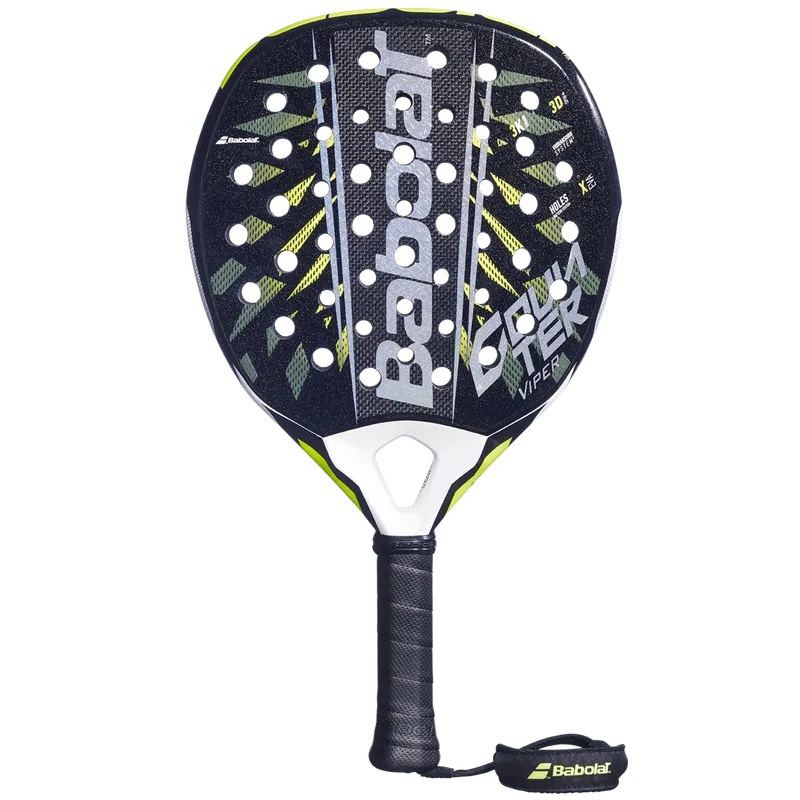
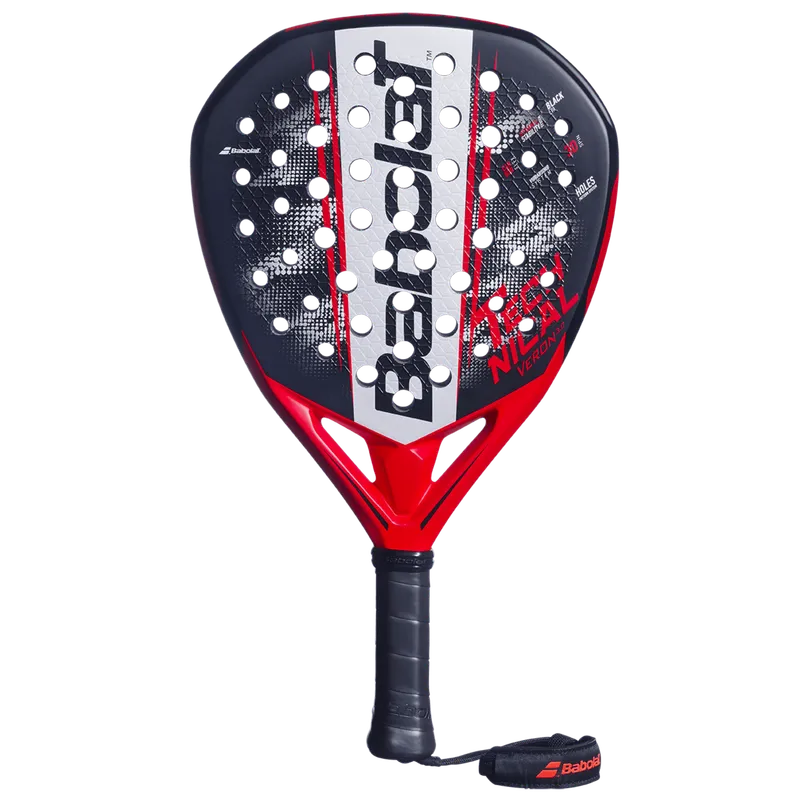
The Babolat Counter Viper 2.6 2026 is ideal for advanced attacking players who want a high-balance racket with a large sweet spot that offers a balanced performance profile. On the other hand, the Babolat Technical Veron 3.0 2026 is built for advanced attackers looking for extra power output from a diamond shape and high balance, accepting a smaller sweet spot. Both models serve offensive styles, but their underlying specifications dictate distinct handling characteristics on the court.
| Feature | Babolat Counter Viper 2.6 2026 | Babolat Technical Veron 3.0 2026 |
|---|---|---|
| Season | 2026 | 2026 |
| Weight | 365 g | 360 g |
| Balance | High | High |
| Thickness | 38 mm | 38 mm |
| Face Material | Carbon 3K | Carbon Flex |
| Frame Material | Carbon | Carbon |
| Core Material | X-EVA | Black EVA |
| Shape (our assessment) | Round | Diamond |
| Target Level (our assessment) | Advanced | Advanced |
| Core Hardness (our assessment) | Medium | Medium |
| Power vs Control (our assessment) | 3 (Scale: 1 = Pure Control, 5 = Pure Power) | 4 (Scale: 1 = Pure Control, 5 = Pure Power) |
| Sweet Spot (our assessment) | Large | Small |
| Player Type (our assessment) | Attacker | Attacker |
Which one has more power?
When assessing power output, the Babolat Technical Veron 3.0 2026 holds an edge over the Babolat Counter Viper 2.6 2026. In our assessment, we rate the Technical Veron 3.0 at a 4 on our 1-to-5 power versus control scale, placing it firmly in power-oriented territory. Its diamond head shape shifts mass higher up, assisting offensive maneuvers like overhead smashes and aggressive net play.
The Counter Viper 2.6 2026, by contrast, receives a 3 on our power versus control scale, representing a neutral balance between offensive punch and ball placement. While it still features a high balance and is aimed at attacking players, its round shape distributes weight differently, making overhead shots like the vibora or finish smashes feel more controlled rather than purely explosive.
Which is easier to play and defend with?
Defensive comfort and forgiveness depend heavily on sweet spot size and head shape. In our assessment, the Babolat Counter Viper 2.6 2026 features a round shape and a large sweet spot. When forced deep near the back glass, this combination makes executing wall exits or lobs more forgiving if contact is slightly off-center. Despite weighing 365 g—5 grams heavier than its counterpart—the generous sweet spot gives players greater margin for error during fast defensive exchanges.
Conversely, the Babolat Technical Veron 3.0 2026 weighs 360 g and combines a high balance with a diamond shape. In our assessment, it has a small sweet spot. Defending off the glass or handling low, fast balls requires higher precision from the player. Off-center hits during intense defensive rallies are punished more quickly on the Technical Veron 3.0 compared to the Counter Viper 2.6.
How do their materials and touch compare?
Both rackets share a 38 mm profile, carbon frames, and in our assessment, a medium core hardness. However, their core and face materials differ significantly. The Counter Viper 2.6 2026 utilizes Carbon 3K on the face paired with an X-EVA core. This setup offers a crisp, stable touch suited for counter-attacking play and controlled transition shots like the bandeja.
The Technical Veron 3.0 2026 pairs a Carbon Flex face with a Black EVA core. Carbon Flex combines carbon and fiberglass to provide a slightly different feel upon ball impact. Note that specific dampening specs or precise flexibility scores are not stated by the manufacturer, but both frames maintain a medium core hardness rating in our evaluation.
Who should buy which?
Both rackets target advanced attacking players on either side of the court, but they appeal to different performance priorities:
Choose the Babolat Counter Viper 2.6 2026 if you:
- Want an attacking racket with a neutral 3/5 power-to-control rating on our scale.
- Prefer a round head shape with a large sweet spot for extra forgiveness when defending off the glass.
- Favor a slightly heavier 365 g frame paired with a Carbon 3K face and X-EVA core.
Choose the Babolat Technical Veron 3.0 2026 if you:
- Seek elevated power (rated 4/5 on our scale) to maximize smashes and net attacks.
- Prefer a diamond shape and a lighter 360 g weight with a high balance.
- Have the technical accuracy required to consistently hit a smaller sweet spot.
Frequently asked questions
What player level are these rackets designed for?
In our assessment, both the Babolat Counter Viper 2.6 2026 and the Babolat Technical Veron 3.0 2026 are designed for advanced players who play an attacking style.
Which racket offers a larger sweet spot?
In our assessment, the Babolat Counter Viper 2.6 2026 features a large sweet spot due to its round shape, whereas the Babolat Technical Veron 3.0 2026 features a small sweet spot paired with its diamond head shape.
What are the main material differences between the two models?
The Counter Viper 2.6 2026 uses a Carbon 3K face and an X-EVA core with a total weight of 365 g. The Technical Veron 3.0 2026 utilizes a Carbon Flex face and a Black EVA core with a total weight of 360 g. Both models share a carbon frame and a 38 mm thickness.