

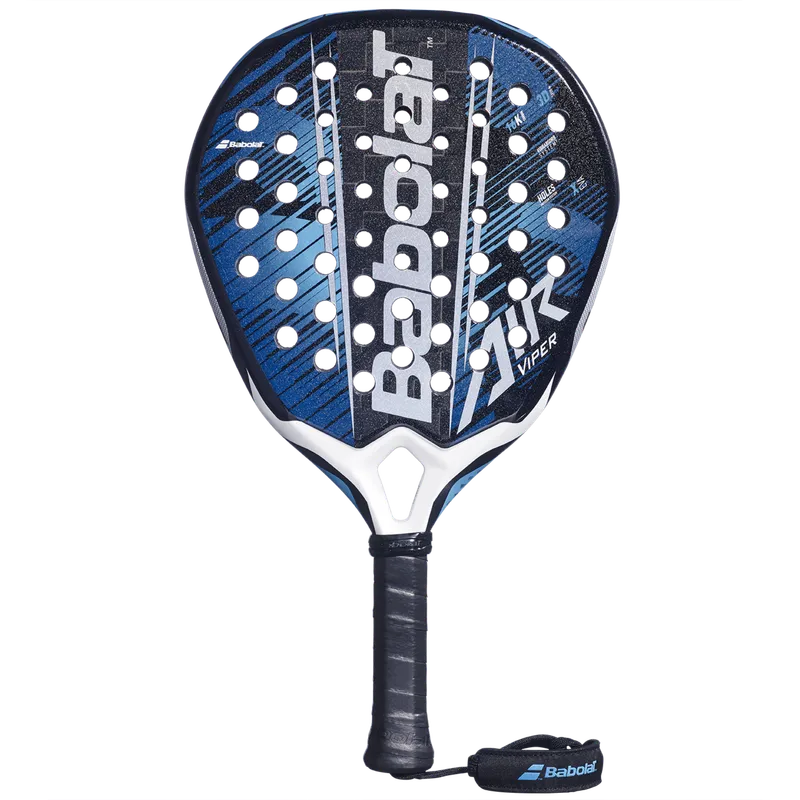
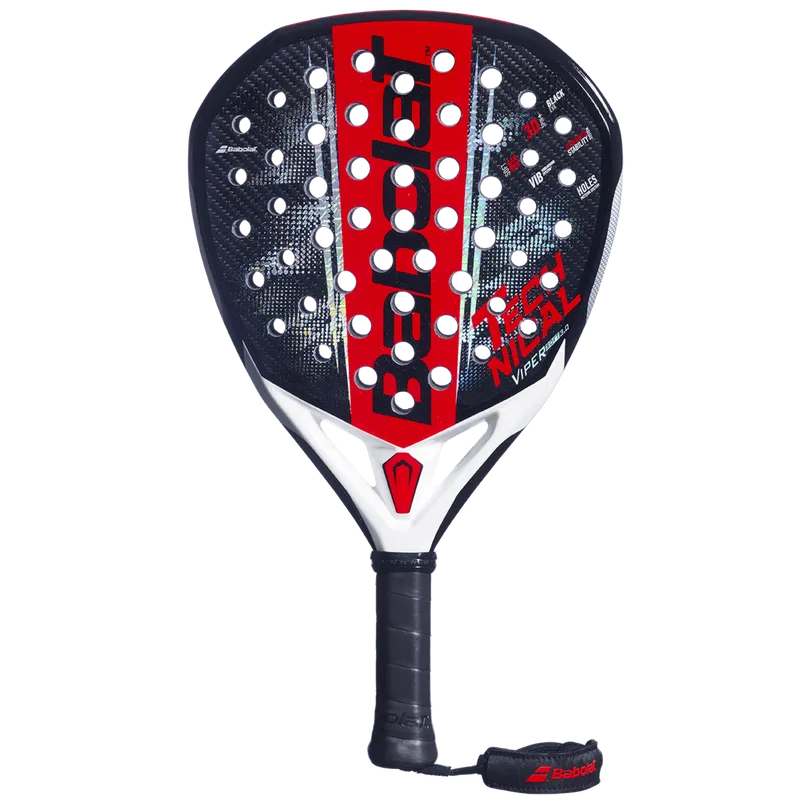
The Babolat Air Viper 2.6 2026 is ideal for advanced all-round players who want a lighter diamond frame offering high power and fast handling for aerial plays like the bandeja. In contrast, the Babolat Technical Viper is engineered for pro-level attackers seeking maximum pure power through a heavy, high-balance setup built for explosive smashes. Both models cater to offensive styles but deliver distinctly different feels and maneuverability.
| Feature | Babolat Air Viper 2.6 2026 | Babolat Technical Viper |
|---|---|---|
| Season | 2026 (Manufacturer) | Not stated |
| Weight | 355 g (Manufacturer) | 370 g (Manufacturer) |
| Profile Thickness | 38 mm (Manufacturer) | Not stated |
| Balance | Not stated | High (Manufacturer) |
| Core Material | X-EVA (Manufacturer) | Hard (Manufacturer) |
| Face Material | Carbon 16K (Manufacturer) | Not stated |
| Frame Material | Carbon (Manufacturer) | Carbon 16K/3K (Manufacturer) |
| Target Level | Not stated (Manufacturer) | Pro (Manufacturer) |
| Shape (our assessment) | Diamond (our assessment) | Diamond (Manufacturer) |
| Player Level (our assessment) | Advanced (our assessment) | Not stated |
| Core Hardness (our assessment) | Medium (our assessment) | Hard (our assessment) |
| Power vs Control (our assessment) | 4 / 5 (our assessment) | 5 / 5 (our assessment) |
| Sweet Spot (our assessment) | Small (our assessment) | Small (our assessment) |
| Player Type (our assessment) | Allrounder (our assessment) | Attacker (our assessment) |
Which one has more power?
When evaluating offensive output, the Babolat Technical Viper takes the top spot. On our power versus control scale (where 1 represents pure control and 5 represents pure power), in our assessment we rate the Technical Viper at a 5 out of 5. The manufacturer equips it with a 370 g weight, a high balance, and a hard core, which creates exceptional kinetic energy transfer for aggressive overheads, jump smashes, and fast net play.
The Babolat Air Viper 2.6 2026 is also power-oriented, but tuned differently. In our assessment, we rate its power at a 4 out of 5 on our scale. It features a manufacturer weight of 355 g, a Carbon 16K face, and an X-EVA core. While it generates significant pop for attacking shots such as the vibora or aggressive volleys, it provides slightly less raw momentum behind heavy smashes compared to the heavier Technical Viper.
Which is easier to play?
Handling and ease of play favor the lighter frame. The Babolat Air Viper 2.6 2026 comes in at 355 g, making it considerably lighter than its counterpart. In our assessment, we rate its core hardness as medium, which offers more forgiveness on touch shots and off-center strikes. This lower weight allows players to react quickly during fast net exchanges or while defending off the back glass. However, in our assessment, we rate its sweet spot as small, consistent with its diamond shape.
The Babolat Technical Viper demands much higher technical proficiency and physical effort. Weighing 370 g with a high balance, it puts more leverage on the arm. In our assessment, we rate its core hardness as hard, matching the manufacturer's specification of a hard core. Paired with a small sweet spot (in our assessment), off-center hits will feel stiffer and offer minimal recoil. Players must hit cleanly near the center to avoid mishits when under pressure in defense.
How do their materials and specifications compare?
Looking at official manufacturer specifications, the Babolat Air Viper 2.6 2026 belongs to the 2026 season and features a 38 mm thickness, a 355 g weight, Carbon 16K face weave, Carbon frame construction, and an X-EVA core. Its balance level and target player level are not stated by the brand. In our assessment, we classify its shape as diamond and its core hardness as medium.
For the Babolat Technical Viper, the manufacturer specifies a diamond shape, high balance, 370 g weight, Carbon 16K/3K frame, hard core, and a pro player level classification. Details regarding its release season, frame profile thickness, and face material are not stated. In our assessment, we rate its core hardness as hard.
Who should buy which?
Babolat Air Viper 2.6 2026 is best for:
- Advanced all-round players who want diamond-shape power with agile handling.
- Players looking for a lightweight frame (355 g) to move quickly at the net and react fast off the glass.
- Attackers who prefer a medium core feel (in our assessment) rather than an extremely stiff board.
Babolat Technical Viper is best for:
- Pro-level players who specialize in an aggressive, attacking style.
- Heavy hitters who want maximum power (rated 5 out of 5 in our assessment) and leverage from a high-balance, 370 g setup.
- Left-side players who consistently aim to finish points with high overhead smashes.
Frequently asked questions
What is the weight difference between the Babolat Air Viper 2.6 2026 and Technical Viper?
According to manufacturer specifications, the Air Viper 2.6 2026 weighs 355 g, whereas the Technical Viper weighs 370 g, making the Technical Viper 15 g heavier.
Which racket offers higher power according to PadelLeague's assessment?
In our assessment, the Babolat Technical Viper achieves a 5 out of 5 on our power versus control scale, making it higher in power than the Air Viper 2.6 2026, which we rate at a 4 out of 5.
What core hardness can players expect from each model?
In our assessment, the Air Viper 2.6 2026 has a medium core hardness, while the Technical Viper features a hard core (which matches the hard core material stated by the manufacturer).