

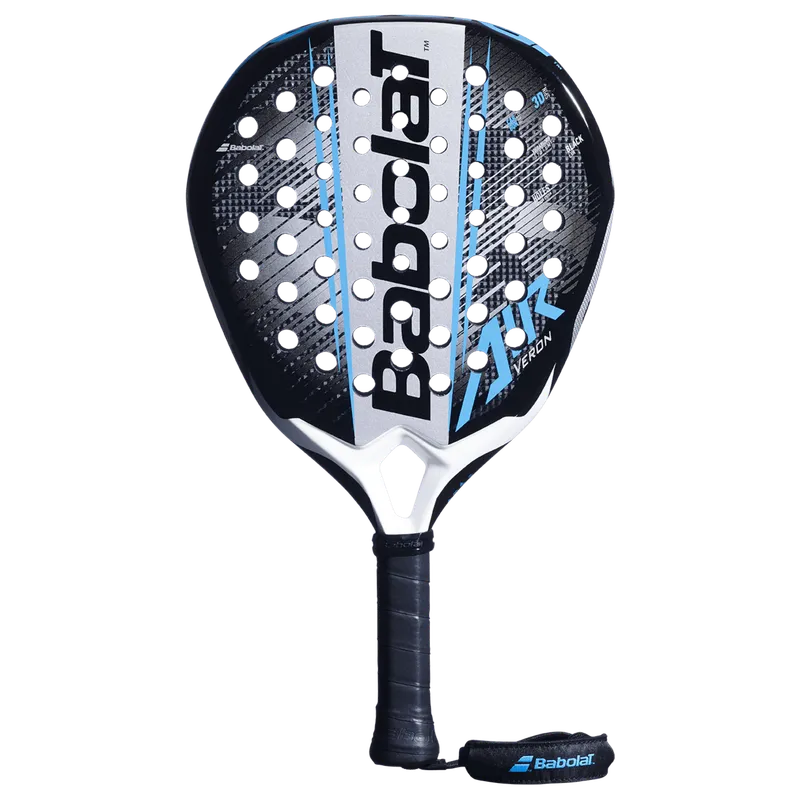
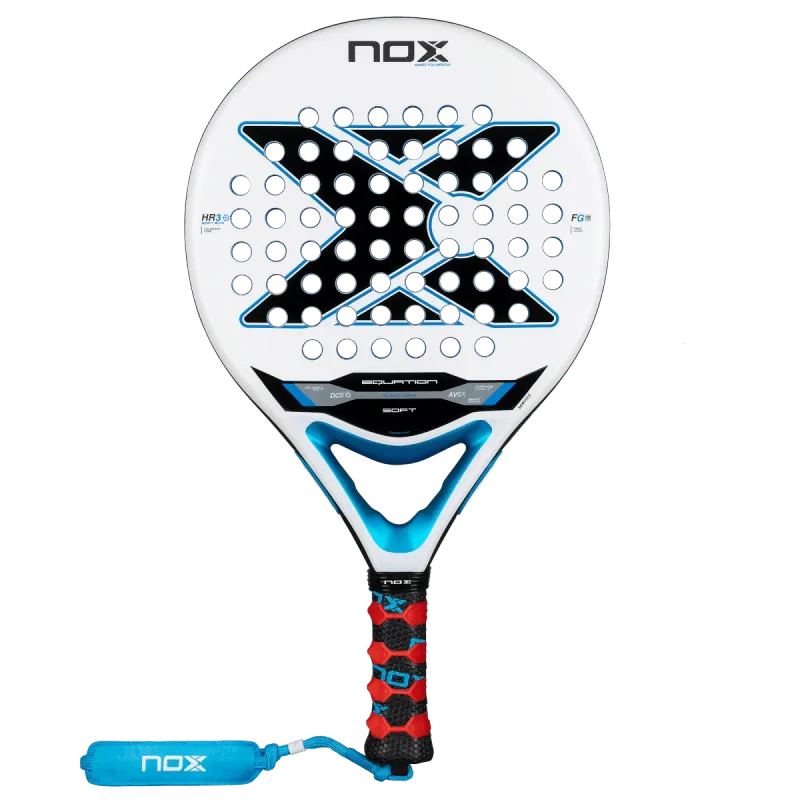
The Babolat Air Veron 2.6 2026 suits advanced allround players seeking a lighter, balanced setup for dynamic attacking and defending across the court. Meanwhile, the NOX Equation Soft Advanced caters to intermediate builders and counter-attackers who prefer a round shape, soft core feel, and high defensive control. Choosing between them comes down to whether you prioritize quick maneuverability with a medium density feel or maximum forgiveness and comfortable feedback.
| Feature | Babolat Air Veron 2.6 2026 | NOX Equation Soft Advanced |
|---|---|---|
| Manufacturer Shape | Not stated | Round |
| Assessed Shape (our assessment) | Hybrid | Not stated |
| Manufacturer Level | Not stated | Intermediate |
| Assessed Level (our assessment) | Advanced | Not stated |
| Weight | 355 g | 360–375 g |
| Thickness | 38 mm | Not stated |
| Face Material | Carbon Flex | Fiber Glass 3K |
| Frame Material | Carbon | Not stated |
| Core Material | Black EVA | Not stated |
| Core Hardness (our assessment) | Medium | Soft |
| Power vs Control (our assessment) | 3 / 5 | 2 / 5 |
| Sweet Spot (our assessment) | Medium | Large |
| Player Types (our assessment) | Allrounder | Builder, Counter |
| Season | 2026 | Not stated |
Which one has more power?
When looking at offensive output, the Babolat Air Veron 2.6 2026 holds the clear advantage. In our assessment, we rate its power-to-control balance at 3 out of 5, placing it squarely in the versatile middle ground. Its medium core hardness assessment—combined with manufacturer-stated Carbon Flex faces, a carbon frame, and a Black EVA core—gives players sufficient firmness to put pace on overhead smashes and punchy viboras at the net.
By contrast, the NOX Equation Soft Advanced is built with a control-first focus. In our assessment, we rate its power vs control at 2 out of 5, leaning distinctly toward control. NOX specifies a Fiber Glass 3K face, which provides higher surface elasticity than stiff carbon weaves. Combined with its soft core hardness in our assessment, this racket absorbs ball impact energy rather than rebounding it forcefully. While this design aids placement, players looking to finish points with raw overhead power will need to supply their own swing speed.
Which is easier to play and defend with?
For defensive play off the glass and building patience from the back of the court, the NOX Equation Soft Advanced presents a more forgiving option. NOX specifies a round shape, which naturally shifts balance closer to the handle, and in our assessment, it features a large sweet spot. Coupled with a soft core hardness in our rating, this combination cushions off-center hits when retrieving tight wall shots or playing delicate chiquita-and-lob sequences under pressure.
The Babolat Air Veron 2.6 2026 requires slightly more precision. In our assessment, we rate its shape as hybrid and its sweet spot as medium. Because we assess its core hardness as medium, it provides direct feedback on ball contact but is less forgiving on mis-hits than a soft round racket. However, its static weight of 355 g makes it easy to maneuver, helping players react quickly during fast net exchanges and transition plays.
How do physical specs and build materials compare?
The physical specifications highlight distinct design approaches from each brand:
- Weight and Dimensions: Babolat builds the Air Veron 2.6 2026 at a lighter 355 g weight with a standard 38 mm thickness. NOX specifies a weight range of 360–375 g for the Equation Soft Advanced, making it heavier. NOX does not state the frame thickness.
- Materials: Babolat constructs its racket with a Carbon frame, Carbon Flex face material, and a Black EVA core for the 2026 season. NOX features a Fiber Glass 3K face. NOX does not state the frame material, core material, or release season for this model.
- Target Player Profile: NOX lists the Equation Soft Advanced for intermediate players. Babolat does not state an official target level, but in our assessment, the Air Veron 2.6 2026 is suited for advanced players. In our assessment of playing styles, the Air Veron fits allrounders, while the Equation Soft Advanced suits game builders and counter-attackers.
Who should buy which?
Choose the Babolat Air Veron 2.6 2026 if you:
- Are an advanced allround player seeking a balanced hybrid frame (in our assessment).
- Prefer a lighter 355 g racket for quick reactions at the net.
- Want a medium core feel with Carbon Flex response for varied offensive and defensive play.
Choose the NOX Equation Soft Advanced if you:
- Are an intermediate player who prioritizes placement, touch, and defensive consistency.
- Focus on building points from the back court or counter-attacking (in our assessment).
- Want a round racket with a soft core feel and a large sweet spot (in our assessment).
Frequently asked questions
What is the main difference in feel between these two rackets?
In our assessment, the Babolat Air Veron 2.6 2026 offers a medium core feel with a balanced 3/5 power-to-control rating, whereas the NOX Equation Soft Advanced has a soft core assessment with a 2/5 power-to-control rating aimed at touch and placement.
Which racket is better suited for defensive play?
The NOX Equation Soft Advanced is better suited for defense. NOX states it has a round shape, and in our assessment, it features a large sweet spot and soft core hardness, making it easier to control deep lobs and defend off the glass.
What are the weight differences between the two models?
Babolat specifies the Air Veron 2.6 2026 at a fixed 355 g. NOX specifies a weight range of 360–375 g for the Equation Soft Advanced, making the NOX model slightly heavier overall.