

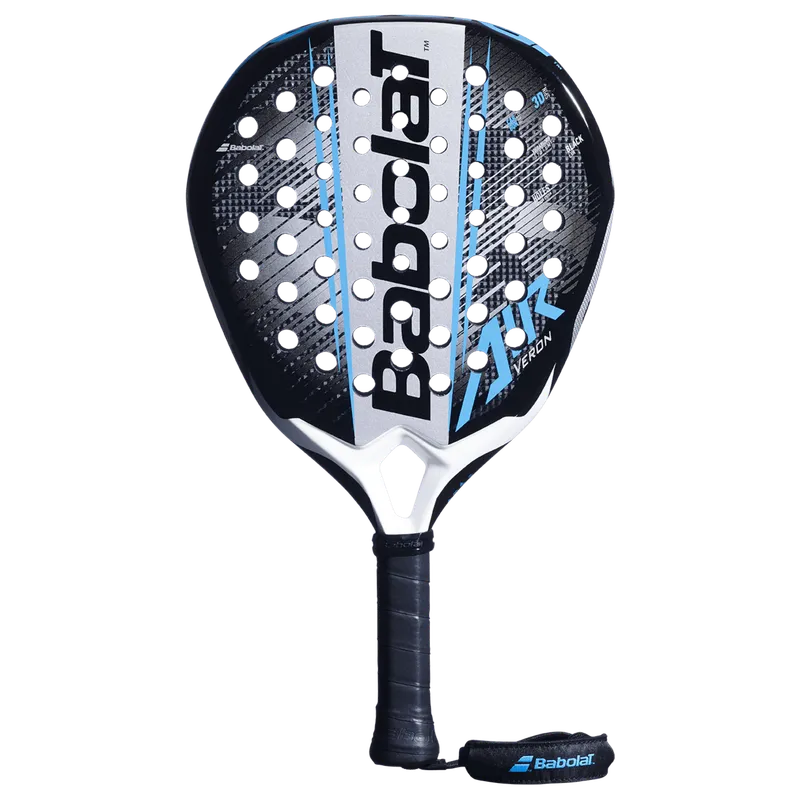
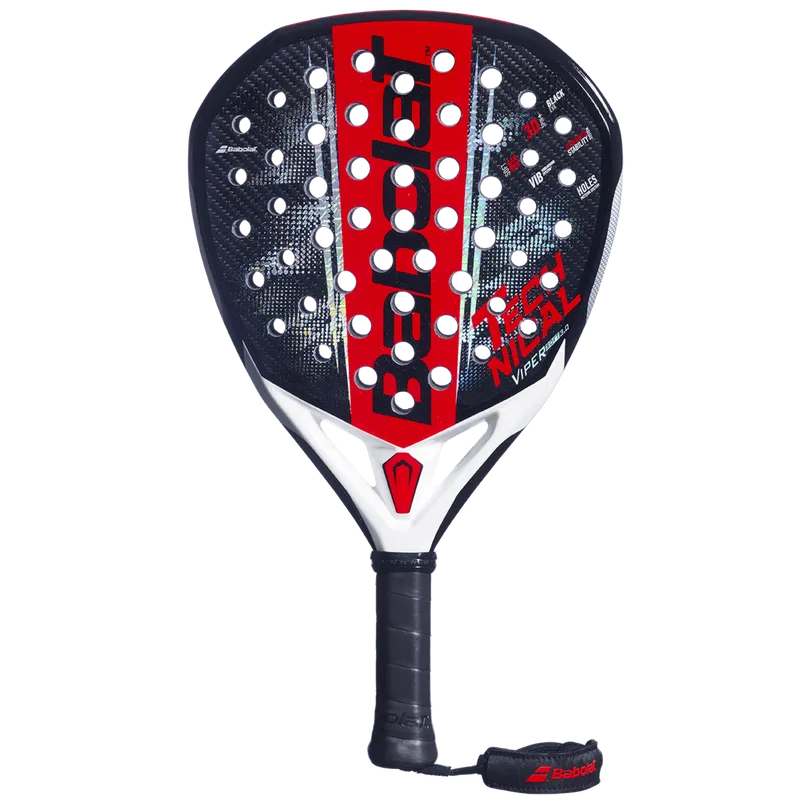
The Babolat Air Veron 2.6 2026 is best suited for all-round advanced players looking for a balanced combination of power and control with agile handling. Conversely, the Babolat Technical Viper is built specifically for high-level offensive players who require maximum power on their overhead attacks. Choosing between the two comes down to whether you prioritize balanced all-court versatility or uncompromising attacking performance.
| Feature | Babolat Air Veron 2.6 2026 | Babolat Technical Viper |
|---|---|---|
| Manufacturer Season | 2026 | Not stated |
| Manufacturer Shape | Not stated | Diamond |
| Manufacturer Balance | Not stated | High |
| Weight | 355 g | 370 g |
| Thickness | 38 mm | Not stated |
| Frame Material | Carbon | Carbon 16K/3K |
| Face Material | Carbon Flex | Not stated |
| Core Material | Black EVA | Hard |
| Target Level (Manufacturer) | Not stated | Pro |
| Target Level (our assessment) | Advanced | Not stated |
| Shape (our assessment) | Hybrid | Not stated |
| Core Hardness (our assessment) | Medium | Hard |
| Power vs Control (our assessment) | 3 (Balanced) | 5 (Pure power) |
| Sweet Spot (our assessment) | Medium | Small |
| Player Type (our assessment) | Allrounder | Attacker |
Which racket offers more power on court?
When evaluating offensive potential, the two rackets occupy very different places on the spectrum. In our assessment, we rate the Babolat Technical Viper at a 5 out of 5 for power vs control, making it an ideal choice for players looking for pure finishing output. The manufacturer specifications support this aggressive profile, highlighting a diamond shape, high balance, and a hard core build. In real match situations, this design allows offensive players to generate massive pace on x3 and x4 smashes, aggressive viboras, and fast attacking volleys at the net.
In contrast, the Babolat Air Veron 2.6 2026 is rated at a 3 out of 5 on our power vs control scale, offering a balanced response rather than overwhelming force. It features a manufacturer-stated Black EVA core and Carbon Flex face, combined with our assessment of a medium core hardness and hybrid shape. While it provides sufficient pop to finish points when structured properly, it does not offer the raw, top-end power output of the Technical Viper during high-overhead smashes.
Which racket is easier to maneuver and defend with?
Maneuverability and defensive ease favor the Babolat Air Veron 2.6 2026. Weighing 355 g according to manufacturer specifications, it is significantly lighter than the 370 g Technical Viper. In our assessment, the Air Veron 2.6 2026 features a hybrid shape and a medium sweet spot. When defending off the glass or reacting to fast body shots during quick net exchanges, its lower weight and moderate sweet spot size make it far more forgiving and easier to position under time pressure.
The Babolat Technical Viper presents a much stiffer challenge in defensive scenarios. With a heavier 370 g mass, high balance, hard core, and what we assess as a small sweet spot, off-center hits when defending deep in the court or resetting lob attacks can lead to quick loss of depth. Players using the Technical Viper must rely on precise technique and strong footwork to handle fast-paced defensive situations effectively.
How do they impact playing style, court position, and arm comfort?
Your choice between these models significantly influences court positioning, playing style, and overall comfort. The Babolat Air Veron 2.6 2026 is designed for allrounders in our assessment. Its 355 g weight, Black EVA core, and medium core hardness (our assessment) ensure steady ball output, reduced impact harshness, and better overall arm comfort during long matches. Whether you play on the drive or backhand side, it accommodates flexible transitions from deep back-glass defense to controlled chiquitas and tray shots like the bandeja.
The Babolat Technical Viper demands an aggressive player profile. Directed at pro-level players by the manufacturer and assessed by us for dedicated attackers, it fits best on the left side of the court where finishing points is the primary duty. However, its 370 g weight, high balance, and hard feel mean that arm comfort is secondary to performance. Players without strong physical conditioning or solid technical mechanics may find the stiff feedback demanding over extended play sessions.
Who should buy which?
Choose the Babolat Air Veron 2.6 2026 if you:
- Are an advanced player looking for a balanced 3/5 power-to-control ratio.
- Prefer a lighter 355 g racket that offers better arm comfort and swift handling.
- Value defensive control off the glass with a medium sweet spot and medium core hardness (our assessment).
- Play an all-round game requiring versatility in both attack and defense.
Choose the Babolat Technical Viper if you:
- Are a high-level or pro player seeking maximum power (rated 5/5 in our assessment).
- Play primarily as a left-side attacker specializing in heavy smashes, aggressive volleys, and fast viboras.
- Prefer a heavier 370 g racket with a high balance, diamond shape, and hard core.
- Have the technical precision needed to consistently hit a smaller sweet spot (our assessment).
Frequently asked questions
Is the Babolat Air Veron 2.6 2026 suitable for beginners?
In our assessment, the Babolat Air Veron 2.6 2026 is tailored for advanced all-round players. Its balanced characteristics may be manageable, but beginner players generally benefit from rackets specifically targeted at entry-level play with maximum forgiveness.
What are the main material differences between these rackets?
According to official manufacturer details, the Air Veron 2.6 2026 uses a Carbon frame, Carbon Flex face, and Black EVA core. The Technical Viper utilizes a Carbon 16K/3K frame and a hard core, while its face material is not explicitly stated in the manufacturer facts.
Which racket is better for players recovering from arm strain?
In our assessment, the Air Veron 2.6 2026 is the better choice for arm comfort due to its medium core hardness, lighter 355 g weight, and medium sweet spot. The Technical Viper features a heavier 370 g build, high balance, hard core, and small sweet spot, which puts greater physical demand on the arm.