

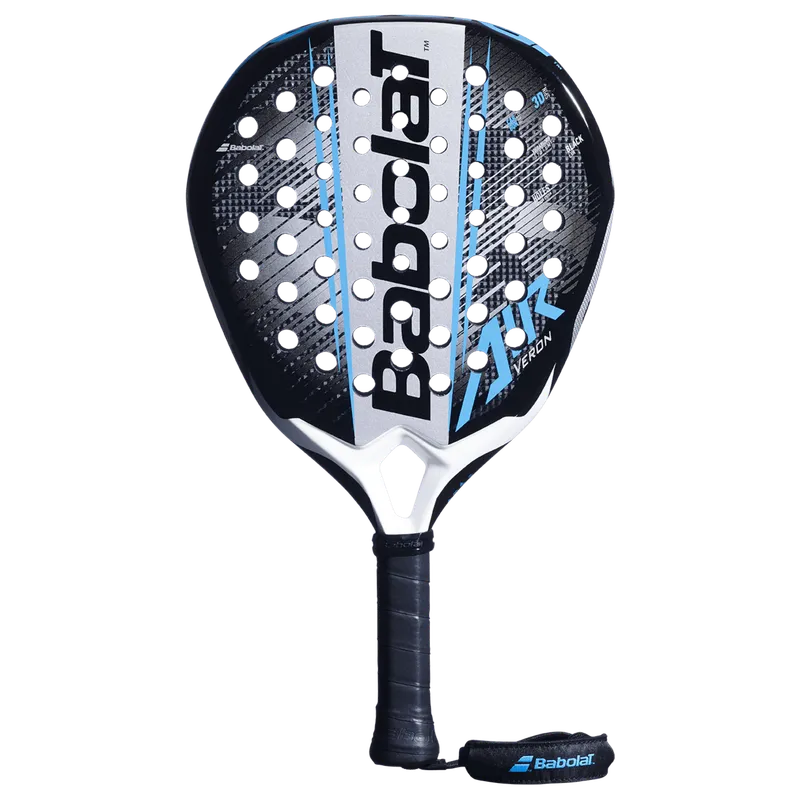
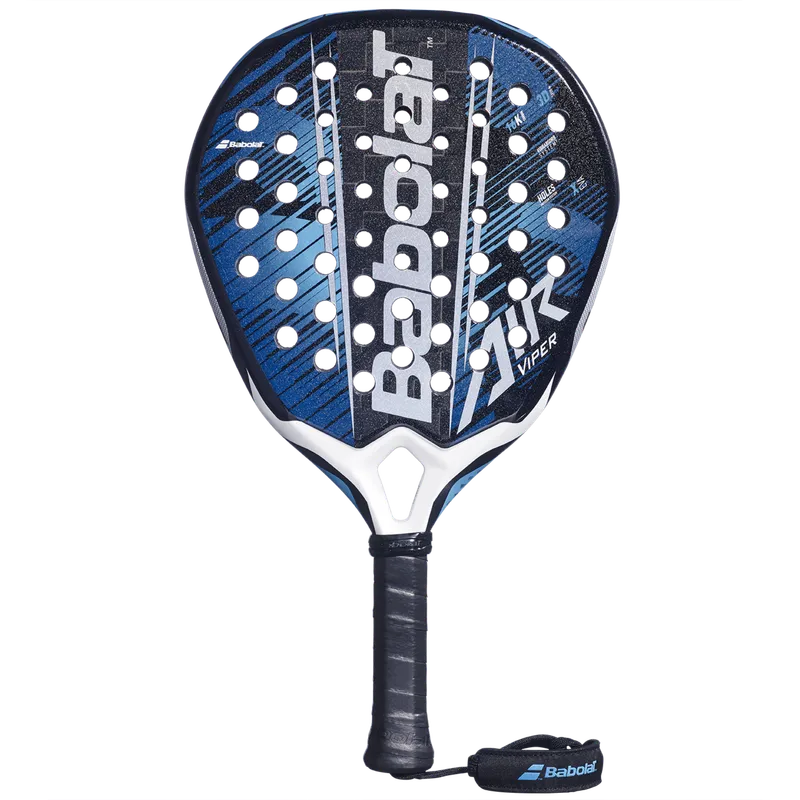
The Babolat Air Veron 2.6 2026 is ideal for advanced allrounders seeking a versatile hybrid racket with a medium sweet spot that balances defense and attack. Meanwhile, the Babolat Air Viper 2.6 2026 suits advanced allrounders who prefer a diamond shape and extra overhead power, accepting a smaller sweet spot for aggressive play. Both rackets weigh 355 g and offer a medium core hardness, but they cater to distinct tactical styles on the court.
| Feature | Babolat Air Veron 2.6 2026 | Babolat Air Viper 2.6 2026 |
|---|---|---|
| Season | 2026 | 2026 |
| Weight | 355 g | 355 g |
| Thickness | 38 mm | 38 mm |
| Face Material | Carbon Flex | Carbon 16K |
| Frame Material | Carbon | Carbon |
| Core Material | Black EVA | X-EVA |
| Racket Shape (our assessment) | Hybrid | Diamond |
| Player Level (our assessment) | Advanced | Advanced |
| Core Hardness (our assessment) | Medium | Medium |
| Power vs Control (our assessment) | 3 / 5 | 4 / 5 |
| Sweet Spot (our assessment) | Medium | Small |
| Player Type (our assessment) | Allrounder | Allrounder |
Which racket offers more power?
In our assessment, the Babolat Air Viper 2.6 2026 delivers higher power, scoring a 4 out of 5 on our power versus control scale, whereas the Air Veron 2.6 2026 rates at a balanced 3 out of 5. The diamond shape of the Air Viper shifts leverage higher up the frame, assisting players during offensive net play, aggressive bandejas, and finishing smashes. The Air Veron utilizes a hybrid shape, which distributes weight more evenly for a moderate power output that remains controlled during fast-paced exchanges.
Which one is easier to play and defend with?
In our assessment, the Babolat Air Veron 2.6 2026 is easier to play with when defending off the glass or handling low, difficult balls in the back court. We rate its sweet spot as medium, offering a wider central striking zone than the small sweet spot found on the Air Viper 2.6 2026. While both models share a light 355 g weight and a 38 mm profile, the larger sweet spot and hybrid geometry of the Air Veron provide extra forgiveness on off-center hits during intense defensive rallies.
How do the materials differ?
According to the manufacturer, both 2026 models feature a carbon frame, 38 mm thickness, and a 355 g weight. However, their face and core combinations are distinct. The Air Veron 2.6 2026 pairs a Carbon Flex face with a Black EVA core. In contrast, the Air Viper 2.6 2026 uses a Carbon 16K face combined with an X-EVA core. While official firmness metrics are not provided by the brand, in our assessment, both material configurations yield an overall medium core hardness.
Who should buy which?
Babolat Air Veron 2.6 2026:
- Advanced allrounders wanting a clean balance between power and control (rated 3 out of 5).
- Players who value a medium sweet spot for consistent returns off the back glass and controlled lobs.
- All-court players who prefer a hybrid shape with a Carbon Flex face setup.
Babolat Air Viper 2.6 2026:
- Advanced allrounders looking for enhanced power (rated 4 out of 5) to dominate at the net.
- Aggressive hitters who rely on power for smashes, viboras, and fast volleys.
- Precise players comfortable managing a diamond shape with a smaller sweet spot.
Frequently asked questions
Are these rackets suitable for intermediate players?
In our assessment, both rackets are categorized for advanced players. Suitability for intermediate players is not stated, though the Air Veron's medium sweet spot provides slightly more margin for error than the Air Viper's small sweet spot.
Which racket offers better arm comfort?
Manufacturer specifications do not detail specific arm-comfort or vibration-dampening systems for either model. In our assessment, both rackets feature a medium core hardness and share identical 355 g weights.
Which court side do these rackets best suit?
Both models are assessed for allrounders. Left-side attacking players may lean toward the extra power and diamond shape of the Air Viper 2.6 2026, while right-side or build-up players may prefer the balanced power and medium sweet spot of the hybrid Air Veron 2.6 2026.