

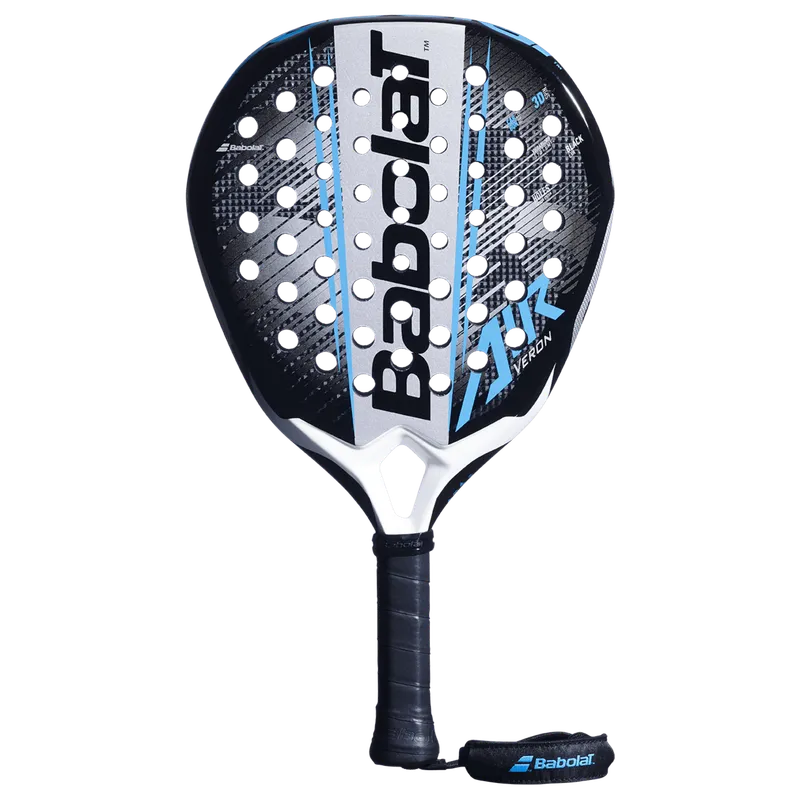
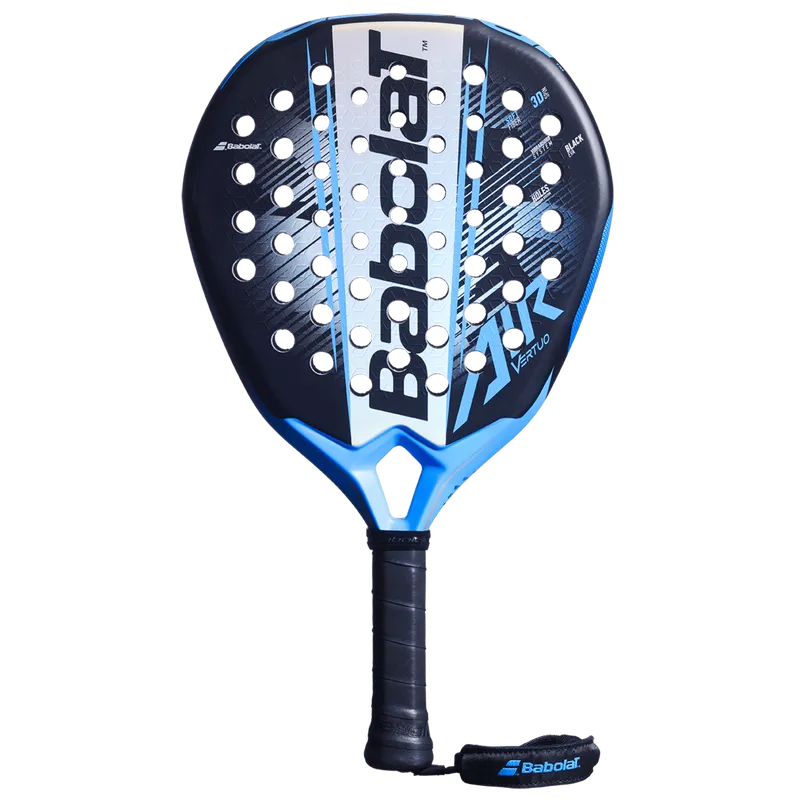
The Babolat Air Veron 2.6 2026 is best suited for advanced all-round players who want a slightly heavier frame with a medium core hardness and a Carbon Flex face for direct feedback. Conversely, the Babolat Air Vertuo 2.6 2026 caters to intermediate all-rounders who prefer a lighter racket featuring a Fiberglas face and a soft core for effortless playability and arm comfort. Both models share a balanced profile, but target distinctly different experience levels.
| Spec / Feature | Babolat Air Veron 2.6 2026 | Babolat Air Vertuo 2.6 2026 |
|---|---|---|
| Season | 2026 | 2026 |
| Weight | 355 g | 345 g |
| Thickness | 38 mm | 38 mm |
| Face Material | Carbon Flex | Fiberglas |
| Frame Material | Carbon | Carbon |
| Core Material | Black EVA | Black EVA |
| Shape (our assessment) | Hybrid | Hybrid |
| Target Level (our assessment) | Advanced | Intermediate |
| Core Hardness (our assessment) | Medium | Soft |
| Power vs Control (our assessment) | 3 (Balanced) | 3 (Balanced) |
| Sweet Spot (our assessment) | Medium | Medium |
| Player Type (our assessment) | Allrounder | Allrounder |
Which racket offers better performance at the net?
When transitioning to the net for aggressive attack plays, the difference in build materials between these two rackets becomes evident. According to manufacturer specifications, the Babolat Air Veron 2.6 2026 weighs 355 g and features a Carbon Flex face paired with a Black EVA core. In our assessment, this combination creates a medium core hardness that gives advanced players extra solidity during fast volleys, overhead smashes, and aggressive bandejas or viboras. The extra 10 grams of mass provides a more stable hitting surface against heavy incoming balls.
In contrast, the Babolat Air Vertuo 2.6 2026 comes in lighter at 345 g and uses a Fiberglas face. In our assessment, its soft core hardness allows intermediate players to maneuver quickly in fast exchanges at the net. While it may offer slightly less absolute structural rigidity than the Veron during high-speed smashes, its lightweight hybrid design helps players react rapidly to body shots and quickly adjust their racket positioning at the net.
Which is easier to play and defend with?
Defending off the back glass requires a balance of reaction speed, core response, and player technique. The Babolat Air Vertuo 2.6 2026 excels in defensive situations due to its 345 g weight, soft core, and flexible Fiberglas face. Intermediate players will find that defending deep lobs or pushing the ball out from the back glass demands less physical exertion, as the softer material dynamic absorbs impact easily and offers forgiveness. Furthermore, in our assessment, the soft core hardness combined with the lighter weight makes the Vertuo gentler on the elbow and arm.
On the other hand, the Babolat Air Veron 2.6 2026 requires more active technique and physical input when defending from the back of the court. Weighing 355 g with a medium core hardness, it does not bounce the ball off the face as effortlessly at low speeds. Advanced players who possess good footwork and precise swing mechanics will appreciate the extra touch and predictable ball placement when digging out difficult shots off the glass, though it demands slightly more physical effort overall.
How do they compare in power versus control?
In our assessment, both the Babolat Air Veron 2.6 2026 and the Babolat Air Vertuo 2.6 2026 sit right in the center of the spectrum, scoring a 3 out of 5 on our power versus control scale. This places both frames firmly in the all-round category. However, they achieve this balance through different material configurations.
The Air Veron 2.6 uses a Carbon Flex face and a medium-hard core setup, providing a firmer touch that delivers controlled depth when you strike with high head speed. The Air Vertuo 2.6 uses a Fiberglas face with a soft core, yielding a springier rebound at moderate swing speeds. As a result, the Vertuo makes generating depth easier for developing players, whereas the Veron rewards cleaner contact and faster acceleration from advanced players.
Who should buy which?
Choose the Babolat Air Veron 2.6 2026 if you:
- Are an advanced all-round player seeking a balanced performance profile.
- Prefer a heavier frame (355 g) for greater stability on aggressive net volleys, bandejas, and smashes.
- Value the crisp, firmer feel of a Carbon Flex face with medium core hardness.
- Want a hybrid racket that handles both left-side and right-side tactical demands effectively.
Choose the Babolat Air Vertuo 2.6 2026 if you:
- Are an intermediate all-round player looking for a high level of playability.
- Want a lighter racket (345 g) that reduces arm fatigue and enhances quick maneuverability.
- Benefit from a Fiberglas face and soft core hardness that assist with defensive output off the glass.
- Require an easy-to-handle hybrid model to develop your overall game across any court position.
Frequently asked questions
What are the main material differences between these two rackets?
According to the manufacturer, the Air Veron 2.6 2026 features a Carbon Flex face, while the Air Vertuo 2.6 2026 uses a Fiberglas face. The Veron is also 10 grams heavier at 355 g compared to the 345 g Vertuo. Both rackets share a Carbon frame and a Black EVA core.
Are these rackets suitable for both left and right side players?
Yes. In our assessment, both rackets are hybrid-shaped allrounders with a medium sweet spot and a 3 out of 5 power-to-control rating. This balanced profile allows them to perform effectively on either the left or right side of the court, provided the player chooses the racket that matches their physical strength and experience level.
Which racket offers better arm comfort?
In our assessment, the Babolat Air Vertuo 2.6 2026 offers higher overall arm comfort. Its lower weight of 345 g combined with a soft core hardness absorbs vibrations more effectively and requires less strength to maneuver compared to the 355 g weight and medium core of the Air Veron 2.6 2026.