

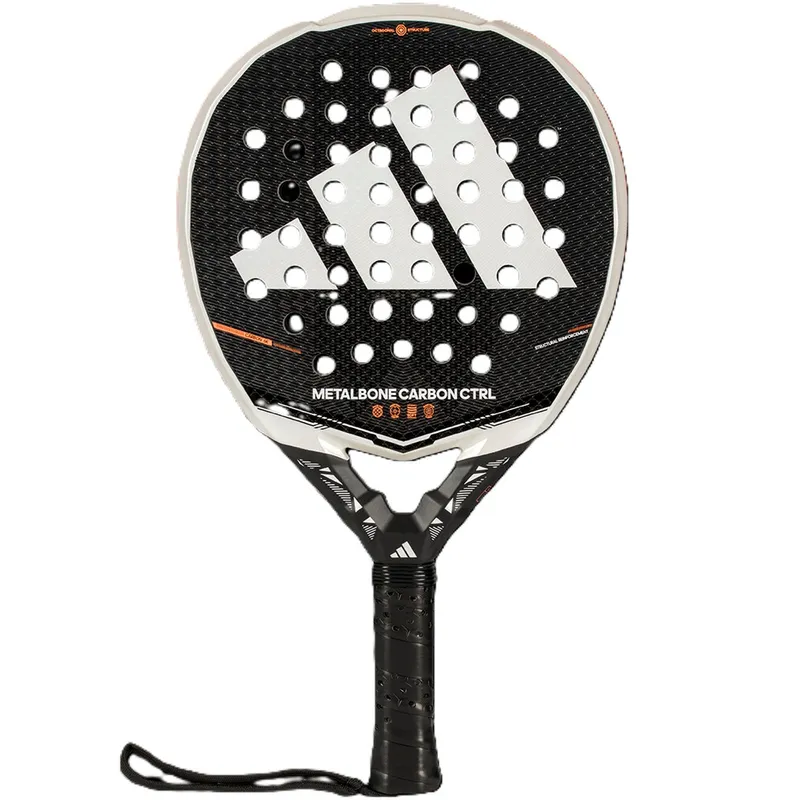
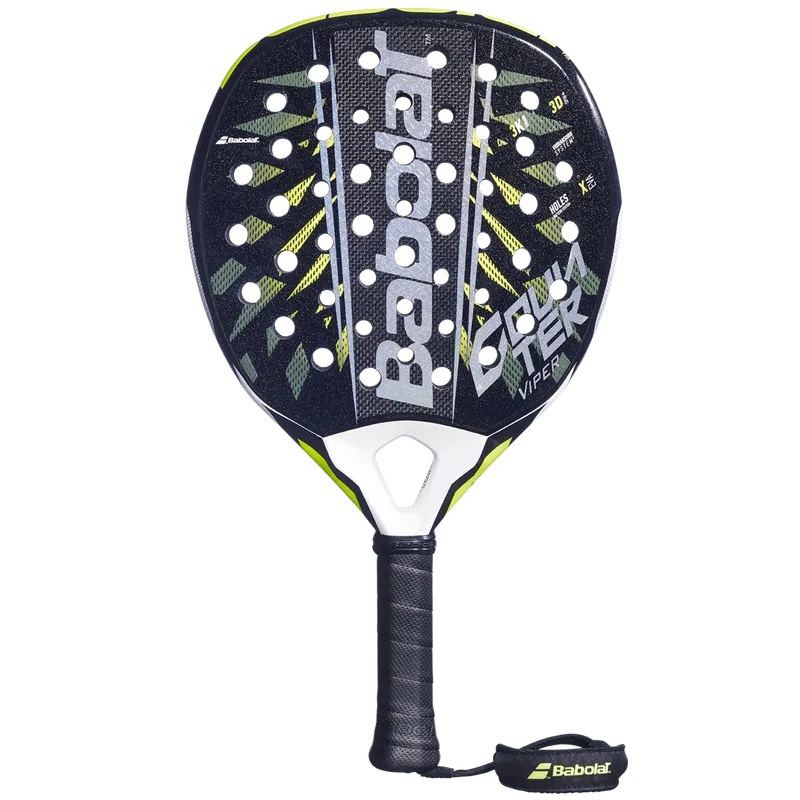
The adidas Metalbone Carbon CTRL 3.5 is best suited for defensive builders who prioritize high maneuverability, arm comfort, and precise shot placement from the back of the court. In contrast, the Babolat Counter Viper 2.6 2026 targets advanced counter-attackers who need a high balance to transition efficiently into aggressive overheads and net play. Both serve advanced players, but their distinct balance and core setups reward completely different styles of play.
| Feature | adidas Metalbone Carbon CTRL 3.5 | Babolat Counter Viper 2.6 2026 |
|---|---|---|
| Target Level | Advanced (Manufacturer) | Advanced (our assessment) |
| Season | Not stated | 2026 (Manufacturer) |
| Shape | Round (Manufacturer) | Round (our assessment) |
| Weight | 365 g (Manufacturer) | 365 g (Manufacturer) |
| Thickness | Not stated | 38 mm (Manufacturer) |
| Balance | Even (Manufacturer) | High (Manufacturer) |
| Frame Material | Carbon 6K (Manufacturer) | Carbon (Manufacturer) |
| Face Material | Not stated | Carbon 3K (Manufacturer) |
| Core Material | Soft (Manufacturer) | X-EVA (Manufacturer) |
| Core Hardness (our assessment) | Soft | Medium |
| Power vs Control (our assessment) | 2 (Control-focused) | 3 (Balanced) |
| Sweet Spot (our assessment) | Large | Large |
| Player Profile (our assessment) | Builder | Attacker |
Which one has more power?
In our assessment, the Babolat Counter Viper 2.6 2026 delivers higher power potential, earning a 3 on our 1-to-5 power-versus-control scale compared to a 2 for the adidas Metalbone Carbon CTRL 3.5. This difference stems largely from weight distribution and core composition.
The Babolat features a high balance stated by the manufacturer combined with an X-EVA core, which we rate as medium core hardness. When stepping up for smashes or aggressive viboras, that top-heavy balance helps generate extra head speed and ball penetration. Conversely, the adidas Metalbone Carbon CTRL 3.5 uses an even balance and a soft core, resulting in a soft core hardness rating in our assessment. While this setup provides pleasant ball output on slower swings, it tends to absorb energy on maximum-effort smashes, favoring placement over raw execution.
Which is easier to defend with off the glass?
Defending deep in the court and handling fast balls off the wall requires quick handling and forgiving touch. The adidas Metalbone Carbon CTRL 3.5 stands out in these defensive scenarios. Its manufacturer-specified even balance keeps the racket feeling agile during quick reactions, while its soft core helps absorb high-pace shots and redirect them deep into the opponent's court. In our assessment, its large sweet spot further adds consistency when defending off the glass under pressure.
The Babolat Counter Viper 2.6 2026, which we also assess as having a round shape and a large sweet spot, is somewhat more demanding when defending. Its high balance places more mass toward the head of the racket. As a result, players need earlier preparation and good wrist strength to control lob height or block fast wall rebounds effectively.
How do they perform at the net and during overheads?
At the net, the choice comes down to whether your tactical goal is point construction or aggressive finishing. The adidas Metalbone Carbon CTRL 3.5 allows for controlled block volleys and delicate chiquitas into the opponent's feet. The soft touch reduces unwanted pop-ups, giving control-oriented players the stability needed to build points patiently. However, when attempting to hit heavy bandejas or kick smashes, the lower power rating (2 in our assessment) requires the player to generate most of the physical effort.
The Babolat Counter Viper 2.6 2026 excels during overhead transitions and aggressive net play. Thanks to its head-heavy balance and medium core hardness, fast volleys and overhead strikes carry significantly more weight. Counter-attacking players will find it easier to push opponents back with deep viboras or punch block volleys into open spaces, making it an effective weapon for taking charge at the net.
Who should buy which?
adidas Metalbone Carbon CTRL 3.5 is best for:
- Right-side players and builders who structure points through patience and placement.
- Players seeking arm comfort provided by an even balance and a soft core.
- Advanced players who prioritize maximum control, defensive maneuverability, and a forgiving feel.
Babolat Counter Viper 2.6 2026 is best for:
- Counter-attackers who need extra overhead leverage to turn defensive blocks into offensive rallies.
- Players who prefer a medium core response paired with a top-heavy balance for heavier volleys.
- Advanced players who want a round-shaped racket (in our assessment) that does not sacrifice power.
Frequently asked questions
What is the main difference in core feel between these two rackets?
The adidas Metalbone Carbon CTRL 3.5 features a soft core (rated soft in our assessment), which provides higher ball output at low speeds and absorbs vibrations. The Babolat Counter Viper 2.6 2026 features an X-EVA core (rated medium core hardness in our assessment), offering a firmer, more balanced feel on impact.
Are these rackets suitable for intermediate players?
Both rackets are target-marketed for advanced players (adidas by manufacturer specification, Babolat in our assessment). While both models feature a large sweet spot in our assessment, their balance setups—even for the adidas and high for the Babolat—are tailored for players with developed stroke technique.
Which racket offers better arm comfort?
The adidas Metalbone Carbon CTRL 3.5 offers superior arm comfort due to its manufacturer-stated even balance and soft core, which dampens ball impact more effectively than the top-heavy, medium-hard response of the Babolat Counter Viper 2.6 2026.